
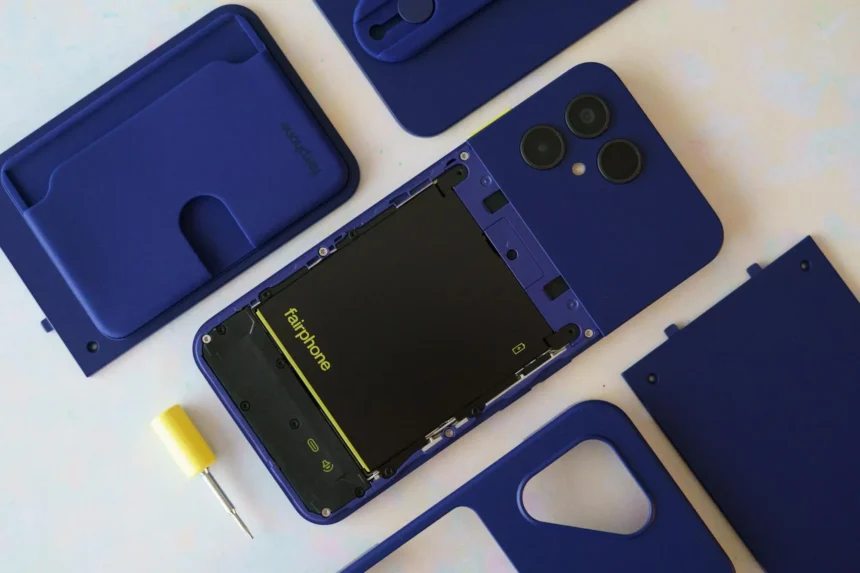
The modern smartphone market has long operated under an implicit consensus that consumers must exchange hardware serviceability for slim enclosures, structural water resistance, and tightly integrated internal components. The arrival of modular consumer hardware directly challenges this paradigm, forcing a thorough evaluation of whether self-service architecture can genuinely lower the total cost of device ownership over time. Evaluating Fairphone 6 Plus repairability reveals how accessible component pricing disrupts traditional device lifecycles, contrasting sharply with the expensive repair ecosystems dominated by major mobile manufacturers.
In a typical consumer device lifecycle, the financial burden of physical damage or gradual battery degradation falls into two main categories: high out-of-warranty service fees or recurring insurance subscriptions. Standard flagship and mid-range devices rely heavily on permanent structural adhesives, custom flex cables, and densely stacked internal board layouts. This manufacturing methodology requires specialized thermal pads, suction machinery, and chemical solvents to access basic wear-and-tear components safely. When a lithium-ion battery degrades or a display glass shatters on a conventional phone, official and third-party service centers routinely quote battery swaps between $100 and $180, while screen replacements frequently cost between $100 and nearly $300. These repair expenses establish a steep economic threshold where servicing a two-year-old mid-tier device approaches its remaining secondary market value, effectively pushing consumers toward premature upgrades.
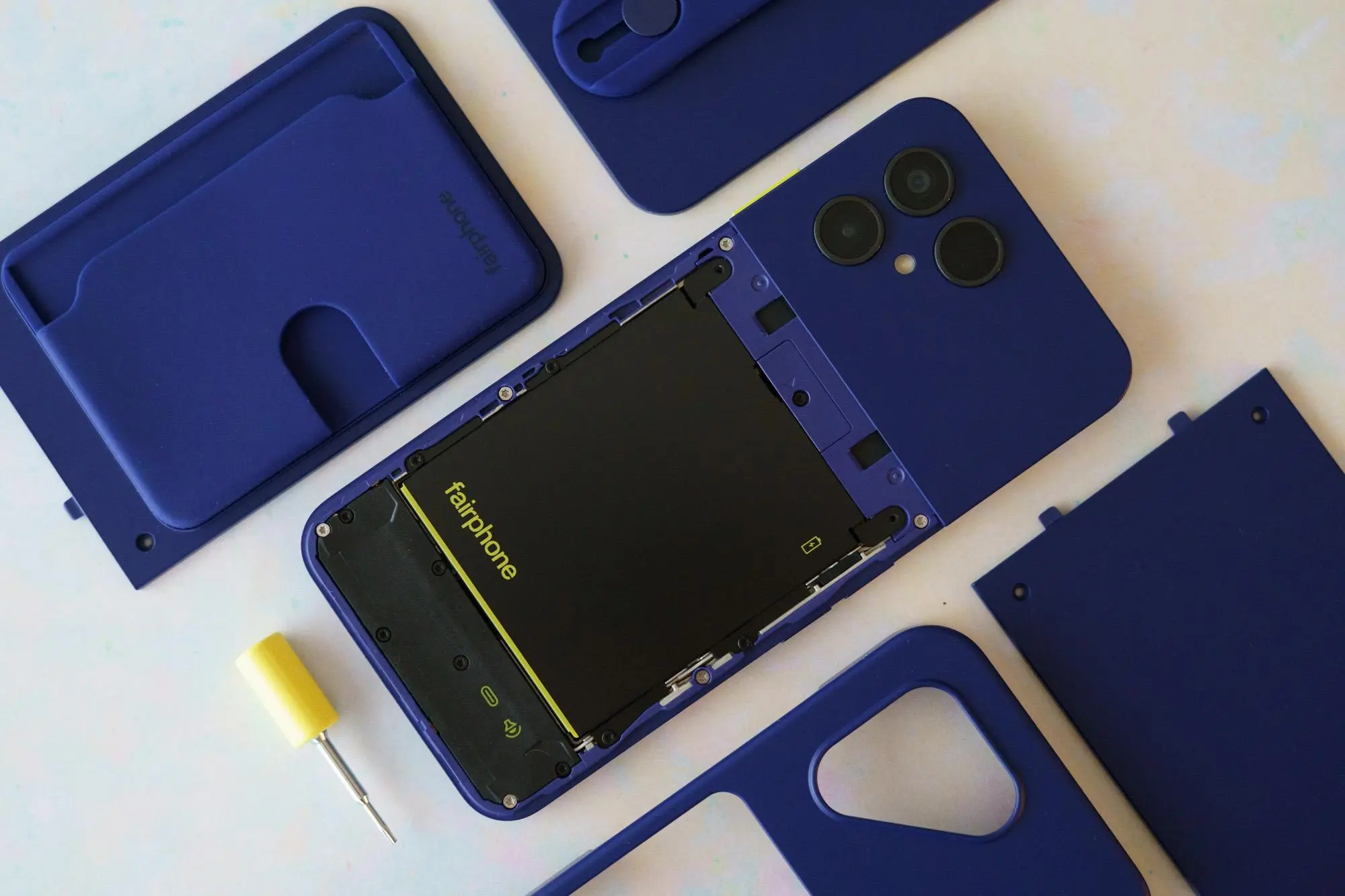
The architectural design of the Fairphone 6 Plus alters this financial dynamic by decentralizing hardware maintenance and transferring physical assembly responsibilities directly to the device owner. Equipped with 12 distinct user-replaceable modules, including the primary battery, screen assembly, USB-C charging port, and all three camera sensors, the chassis bypasses commercial repair center labor charges entirely. Included inside the retail package is a minimal toolkit containing a standard precision screwdriver alongside structured disassembly documentation. While the manufacturer actively seeks out ethically sourced materials across its component supply chain, owners can purchase an official replacement battery for $39.99 or a complete screen module for $89.99 directly through online distribution channels.
When calculated across a four-year usage window, this variance in maintenance expenses fundamentally alters the financial balance sheet of smartphone ownership. For conventional sealed devices, maintaining peak performance across four years usually requires at least one battery service procedure and carries constant exposure to screen damage. Factoring in optional protective service subscriptions like AppleCare or carrier insurance policies, cumulative expenditure on hardware upkeep often rivals the initial retail price of the handset. By eliminating mandatory service retainers and capping component costs near direct manufacturing overhead, modular hardware dramatically depresses long-term operational costs. This math assumes the device owner is willing to invest approximately twenty minutes of personal effort, transforming technical maintenance from a costly third-party service into a basic household task.
Analyzing Fairphone 6 Plus Repairability and Engineering Constraints
While the economic argument for modular hardware remains compelling, user-serviceable architecture introduces distinct mechanical and structural engineering tradeoffs that mainstream brands spent decades eliminating. Sealed smartphone enclosures allow hardware designers to utilize liquid gaskets, ultra-thin internal tolerances, and permanent frame adhesives to maximize internal volumetric efficiency. These design choices leave maximum space for larger battery cells while protecting delicate logic boards from ambient moisture and dust. Modular construction, by contrast, demands discrete board connectors, mechanical screw bosses, reinforced module housings, and internal alignment channels. These structural requirements consume valuable internal volume, resulting in slightly thicker chassis profiles and altered weight distribution across the device.
Environmental sealing creates another significant engineering hurdle for modular smartphones attempting to match mainstream durability standards. Standard unibody smartphones achieve high dust and water resistance ratings through industrial adhesive seals that permanently isolate internal circuitry from the external environment. Reusable rubber gaskets and mechanical compression seals utilized in user-serviceable frames offer lower tolerances against liquid ingress, particularly after repeated manual disassembly procedures. Owners must ensure that internal screws are torqued uniformly and rubber seals remain entirely free of microscopic debris during part swaps. These mechanical realities demonstrate that physical repairability is an intentional engineering compromise between ultimate environmental isolation and straightforward component accessibility.
From a broader industrial vantage point, the true test of modular hardware longevity extends well beyond mechanical ease of disassembly to encompass complex supply chain management. A modular phone platform depends entirely on the long-term availability and regional price stability of original replacement parts over many years. Standard consumer electronics benefit from unified assembly lines that manufacture components in concentrated production runs. Maintaining an active global inventory of discrete spare modules across a five-to-seven-year window requires sustained warehousing capacity, complex logistics networks, and consistent component manufacturing schedules. When evaluating long-term hardware investments, consumers must weigh component supply guarantees against upfront pricing, a dynamic explored in Ronaio’s Pixel 10A hardware longevity analysis.
Silicon Vendor Commitments and System Longevity
Physical hardware durability represents only one half of the long-term smartphone viability equation. A durable mechanical frame that physically survives seven years of hardware swaps remains practically useless if the underlying software platform loses critical security patches or operating system support. In the current mobile ecosystem, system software lifecycles are tightly bounded by semiconductor vendor support contracts. Chipset suppliers routinely retire board support packages and base driver updates long before physical silicon degrades, forcing device manufacturers to undertake custom engineering to extend device lifecycles.
This reality creates an ongoing structural tension between long-term mechanical survival and modern software compatibility. As detailed in Ronaio’s analysis of rising mobile silicon costs, maintaining software support past standard platform windows requires substantial engineering investments that expand exponentially as a product catalog ages. Without sustained driver updates from silicon suppliers, even the most repairable modular handset risks digital deprecation before its physical modules wear out. For modular hardware to deliver its full theoretical value, long-term software support commitments must match the extended physical lifespan enabled by modular hardware components.
Economic Realities of the Self-Repair Ecosystem
The expansion of self-repair alternatives directly intersects with evolving regulatory frameworks and right-to-repair legislation across global markets. Government mandates are gradually compelling mainstream technology companies to provide repair manuals, diagnostic software, and replacement parts to independent repair shops and individual owners. However, major original equipment manufacturers frequently satisfy these legal requirements through complex cryptographic parts-pairing protocols, software authorization locks, and costly tool rental programs that discourage practical DIY maintenance.
In sharp contrast, a natively modular system avoids hardware serialization locks and software calibration gates entirely. When a display panel or battery module is swapped on a modular chassis, the new hardware functions immediately without requiring connection to remote authorization servers or proprietary technician software. This structural simplicity democratizes basic repair, lowering technical barriers for ordinary consumers who lack specialized diagnostic equipment. Nevertheless, a major portion of the market continues to prefer the zero-effort convenience of dropping a damaged phone at an authorized repair hub, even when that service model incurs higher long-term costs.
The industrial shift toward user-serviceable mobile architecture highlights a fundamental transition in how consumer hardware value is created and sustained over time. As regulatory pressures mount and component manufacturing techniques evolve, the balance between disposable integrated devices and serviceable modular systems will determine whether hardware longevity becomes a standard industry expectation or remains a specialized niche alternative.