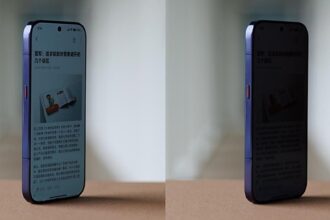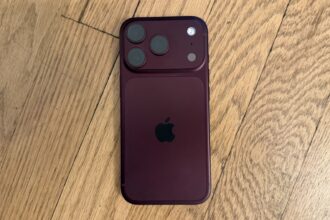


The ultra-premium smartphone segment has entered a pivotal transition period as manufacturers push retail prices beyond standard flagship tiers into the two-thousand-dollar threshold. When evaluating the iPhone Duo vs Galaxy Z Fold 8, prospective buyers face two distinct engineering philosophies competing within a remarkably similar physical footprint. Priced at $1,999 for the iPhone Duo and $1,900 for the Galaxy Z Fold 8, both devices reflect a strategic shift away from narrow, elongated folding designs in favor of wider passport-style aspect ratios. This fundamental structural realignment changes how software interfaces render multi-window productivity applications and broad-format media content.
Despite sharing similar overall proportions, the physical execution of each chassis highlights contrasting industrial priorities between the two technology leaders. Samsung has engineered the Galaxy Z Fold 8 to achieve a thinner profile in both folded and unfolded states, reducing thickness to maximize pocket mobility. Achieving minimal thickness requires extreme density inside the internal mechanical stack, forcing mechanical trade-offs between battery displacement, thermal management channels, and structural reinforcement. Readers tracking broader market developments around foldable iPhone form factors will recognize that reducing chassis depth invariably impacts how mechanical forces distribute across the central hinge mechanism during repeated articulation cycles.
Furthermore, the choice of frame materials directly influences long-term torsional rigidity under daily stress. While lightweight metals reduce overall device weight, they require strategic structural bracing to prevent flex around the flexible display substrate. The structural integrity of a foldable device relies heavily on how the inner hinge assembly absorbs localized impact forces when dropped. As folding devices approach the weight and thickness of standard slab smartphones, the internal mechanical complexity increases exponentially, creating severe spatial constraints for every remaining hardware subsystem.
Structural Design and Passport Aspect Ratios
The adoption of wider passport aspect ratios represents a major departure from earlier generations of foldable devices. Previous iterations relied on narrow, tall outer screens that felt cramped during typing and navigation, alongside elongated inner displays that required awkward software scaling. By adopting a wider aspect ratio when closed, both manufacturers provide an exterior experience that closely mirrors traditional flagship smartphones. When unfolded, the near-square internal screen offers an expansive canvas that optimizes side-by-side application multitasking and desktop-class web browsing.
However, this wider canvas introduces specific engineering challenges for application developers and operating system architects. Mobile software interfaces historically optimized for vertical scrolling must now dynamically adapt to wide aspect ratios without leaving large areas of dead space. While Android features robust windowing systems built over years of tablet development, iOS requires new UI paradigms to handle floating palettes and split-screen workflows seamlessly. The transition to wider screen dimensions ultimately forces both platforms to balance desktop-level software functionality with single-handed ergonomic usability.
Durability Architecture and Dust Ingress Protection
The most consequential structural division between these competing platforms centers on particle ingress mitigation and long-term mechanical reliability. Early foldable smartphones suffered widespread reliability issues stemming from micro-particulates penetrating the flexible display substrate and hinge mechanics. With the Galaxy Z Fold 8, Samsung provides an official IP48 rating. While this specification guarantees protection against continuous liquid immersion, its ingress protection against solid matter remains limited to objects larger than one millimeter. Microscopic dust, pocket lint, and fine mineral grit remain capable of entering the hinge housing over time.
Apple has taken a fundamentally different approach with the iPhone Duo by securing official certifications for full dustproofing alongside complete liquid waterproofing. Sealing a dual-screen hinge against microscopic dust requires dynamic silicon gaskets, wiper arrays, and pressurized tolerance boundaries around flexible display edges. In-depth research from our ongoing iPhone Duo display analysis indicates that multi-layer flexible screens demand precise internal sealing to prevent surface deformation over time. Over a multi-year ownership cycle, unsealed particle entry remains a leading driver of display panel failure, making full dust protection a primary engineering milestone for consumer confidence.
Environmental resilience dictates whether ultra-premium foldables can reliably serve as long-term daily devices under real-world conditions. While liquid resistance protects devices against accidental submersion, daily exposure to fine dust poses an insidious threat to moving hinge assemblies. Friction caused by trapped particulates can gradually degrade smooth hinge movement, causing audible grinding noises and potential screen puncture from underneath. Consequently, the engineering effort required to achieve true dust sealing represents a key differentiator in structural durability.

Camera Architecture and Optical Constraints
Camera system configuration reveals another critical domain where physical chassis boundaries dictate hardware inclusion. Neither the iPhone Duo nor the Galaxy Z Fold 8 incorporates a dedicated optical telephoto lens. Omitting dedicated telephoto modules on devices costing nearly two thousand dollars highlights the severe spatial constraints inherent to ultra-thin foldable chassis design. Periscope lens stacks and multi-element telephoto barrels require substantial internal depth, which conflicts directly with slim foldable profiles.
Instead, both manufacturers rely on high-resolution primary sensors coupled with computational cropping to simulate optical zoom capabilities. The Galaxy Z Fold 8 equips its main camera system with 50-megapixel wide and 50-megapixel ultrawide sensors. The iPhone Duo responds with a 48-megapixel main camera paired with a 48-megapixel ultrawide sensor. While advanced image signal processing can synthesize clean digital crops at low magnification levels, computational processing cannot fully replicate the optical depth, natural background isolation, and raw resolving power of true optical telephoto glass across extended focal lengths.
Front-facing camera implementation further demonstrates differing hardware allocation strategies. Samsung embeds two separate 10-megapixel selfie cameras on the Galaxy Z Fold 8, placing one on the cover screen and another inside the main unfolded display. Apple provides a 12-megapixel camera on the exterior cover screen of the iPhone Duo. For the inner display, Apple has chosen not to publish specific hardware megapixel specifications, though official technical documentation confirms video capture is capped at 1080p resolution on the internal camera sensor. Capping internal video output at high definition rather than 4K resolution points toward physical sensor size restrictions or thermal throughput limitations inside the inner display bezel.
Power Delivery: iPhone Duo vs Galaxy Z Fold 8
Energy management and charging architecture represent crucial operational differences between the two high-end flagships. Samsung delivers faster wired charging recovery times with the Galaxy Z Fold 8, specifying a zero-to-73 percent charge state within 30 minutes under ideal thermal conditions. Apple specifies a zero-to-50 percent charge state over the identical 30-minute window for the iPhone Duo. Sustaining faster wired charging curves requires aggressive heat dissipation management to protect lithium battery chemistry, an engineering challenge made far more complex by the confined thermal boundaries of foldable chassis designs.
Wireless power delivery marks another clear technical divergence between the platforms. The iPhone Duo includes native MagSafe hardware, utilizing integrated magnetic rings to guarantee precise coil alignment and maximize inductive power transfer efficiency. The Galaxy Z Fold 8 supports standard wireless charging protocols but lacks integrated internal alignment magnets required for native Qi2 magnetic attachment without third-party accessories. Magnetic alignment minimizes power loss caused by physical misplacement on charging surfaces while enabling secure mounting options across vehicle, desk, and battery pack ecosystems.
Determining real-world battery endurance remains complex due to differing manufacturer disclosure policies and variable usage patterns. Apple estimates that the iPhone Duo provides up to 24 hours of typical usage, though exact battery capacity in milliamp-hours requires post-launch hardware teardowns to confirm. Raw power claims must always be evaluated against variable screen power consumption, high-brightness HDR demands, and baseline system processor efficiency under heavy multitasking workloads.
The convergence of passport-style aspect ratios, high-resolution dual camera arrays, and custom power delivery systems indicates that premium foldable design is entering a mature iteration phase. As physical dimensions stabilize across the industry, competitive advantages will increasingly depend on micro-mechanical ingress engineering, thermal dissipation efficiency, and integrated accessory ecosystems. The structural choices embedded in both devices demonstrate that achieving long-term physical reliability remains just as vital to market adoption as expanding flexible display real estate.