
When evaluating whether a flagship smartwatch represents a necessary hardware transition or an iterative refinement, prospective buyers must look beyond external appearances. At first glance, the device retains the identical geometry, titanium case material, and orange accents that defined previous generations. Beneath this familiar exterior lies an internal platform engineered around custom silicon architecture and a redesigned sensor cluster. The Apple Watch Ultra 4 delivers a clear shift in biometric sampling frequency, on-device intelligence, and overall battery longevity. Former Chief Executive Officer Tim Cook stepped down prior to the official reveal of this model. However, the hardware fulfills his long-standing mandate to transform personal wearables into proactive health monitoring tools. By analyzing structural changes in sensor physics, system-in-package efficiency, and software aggregation, users can determine how this generation fits into modern wearable evolution.
The central focus of this generation addresses the fundamental trade-off between biometric measurement frequency and battery power consumption. Historically, consumer smartwatches have been forced to throttle sensor sampling intervals to preserve operational runtime, offering episodic snapshots of vital signs rather than continuous telemetry. The introduction of the redesigned Health Sensing System changes this operational balance by pairing expanded sensor surface areas with an efficient application processor. By recording heart rate metrics every five seconds and Heart Rate Variability measurements every five minutes, the watch provides a dense data stream that rivals specialized athletic recovery bands. This architectural shift ensures that users no longer need to choose between multi-day battery endurance and high-resolution biological tracking, establishing a clear baseline for consumer-grade health monitoring.
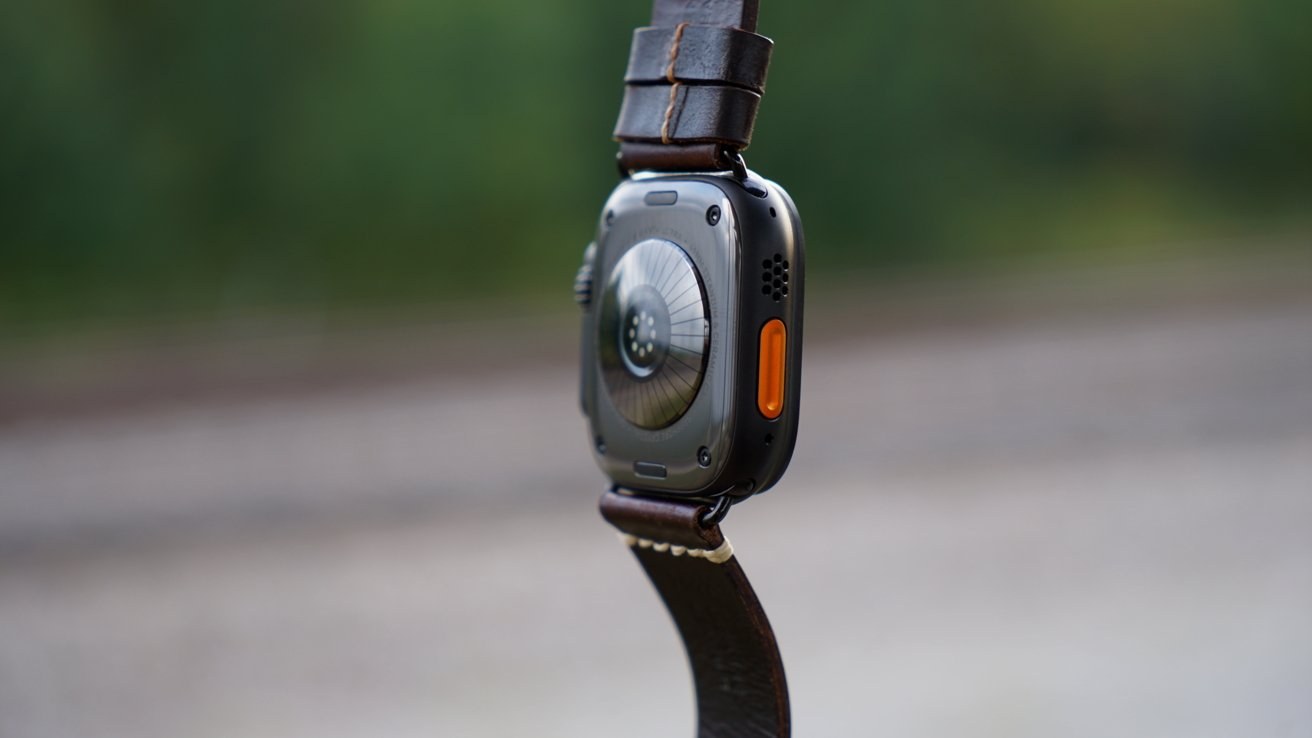
Understanding the physical and engineering changes inside the device requires examining the sensor assembly situated on the underside of the chassis. Engineers redesigned the Health Sensing System by expanding the surface area of the electrodes that encircle the central photodiode array. Green light-emitting diodes pass through dermal layers to read blood volume variations, while larger electrodes increase electrical conduction efficiency across skin interfaces. This hardware modification contributes directly to an approximate weight increase of 1.4 grams over the prior generation. In practical daily wear, this weight variance remains imperceptible, as total mass stays within the expected envelope for a ruggedized titanium timepiece. The trade-off yields substantial dividends in data fidelity, reducing signal noise during vigorous physical activity and improving passive biometric collection.
The most immediate operational impact of this revised sensor stack is reflected in the sampling cadence of core health metrics. While earlier generations sampled heart rate intermittently based on motion state and background activity, the new system records heart rate continuously at five-second intervals during standard operation. Concurrently, Heart Rate Variability data, which serves as a key indicator of autonomic nervous system status, stress response, and physiological recovery, is calculated every five minutes throughout the day and night. This high-frequency sampling transforms the watch into a real-time health telemetry node. By establishing a continuous baseline, the system detects autonomic shifts and cardiovascular stress markers far earlier than legacy devices that rely on sparse sampling protocols.
This elevated data density directly positions the watch against dedicated biometric tracking platforms that have gained popularity among endurance athletes and wellness enthusiasts. Specialized recovery bands have historically dominated the athletic space by emphasizing continuous Heart Rate Variability tracking and algorithmic readiness scoring. With this hardware update, Apple closes the biometric data gap while maintaining full smartwatch capabilities, cellular autonomy, and high-resolution display interaction. Rather than wearing secondary screenless bands, users can capture equivalent or superior data granularity directly from a primary wrist computer. Readers evaluating broader product options can analyze how the Apple Watch Series 12 upgrade compares regarding silicon efficiency and health sensor integration.
The stability of optical biometric sensors depends heavily on skin contact quality, ambient light isolation, and motion suppression algorithms. Larger optical photodiodes allow more reflected green light to reach internal light sensors, compensating for rapid movement during running, cycling, or swimming. By capturing more photons per millisecond, the sensor stack maintains high signal-to-noise ratios even when physiological conditions fluctuate. Furthermore, the surrounding electrode ring provides secondary electrical ground paths that stabilize heart rate measurements during cold weather or low peripheral blood circulation. These subtle optical and electrical refinements demonstrate how micro-hardware adjustments can yield major improvements in continuous biological data collection without requiring entirely new sensor categories.
Continuous biometric collection also changes how software platforms analyze long-term health trends across multiple weeks and months. Sparse data collection often creates artificial variance in weekly averages, leading to misleading health alerts or incorrect training recovery scores. By logging metric points every five seconds, the system filters out acute movement artifacts and anomalous spikes through rolling statistical averages. This mathematical smoothing produces clean trend lines for resting heart rate, baseline heart rate variability, and respiratory health. As a result, the user receives actionable physiological guidance derived from statistically sound sampling rather than sporadic point measurements taken during random idle moments throughout the day.
Silicon Engineering and the S11 Architecture
At the heart of this hardware update is the custom S11 system-in-package, a silicon design that alters how ambient data processing is executed on a wrist-worn computer. Rather than simply scaling down a desktop or smartphone architecture, Apple engineered the S11 with a dedicated Neural Engine derived directly from the A20 Pro chip used in the iPhone 18 Pro. This architectural connection brings mobile-class machine learning execution directly to wrist hardware, enabling complex computational models to run locally without requiring constant cloud communication or heavy reliance on a paired smartphone. The integration of this neural engine allows the watch to process multi-layered sensor streams in real time, serving as the core computing unit for on-device natural language parsing and health algorithms.
The inclusion of an A20 Pro-derived Neural Engine allows watchOS 27 to process local Siri queries with unprecedented speed and privacy protection. Users can query personal health metrics, request calendar summaries, or retrieve information stored within encrypted application databases without transmitting sensitive telemetry to external servers. For example, asking on-device Siri about scheduled meal plans from Calendar data and immediately inquiring about physiological health impacts yields instant, locally computed responses. Furthermore, the S11 processor handles complex system gestures with minimal latency. Features such as near-instant Shazam music identification operate seamlessly within the Smart Stack, using double-tap and single-tap gestures to navigate contextual widgets without interrupting background health monitoring or draining power reserves.
A crucial dimension of the S11 chipset is its ability to balance intense neural computational tasks with strict thermal and power envelopes. In previous generations, running high-frequency machine learning models on-device would have caused thermal throttling and accelerated battery discharge. The advanced fabrication process and microarchitectural efficiency of the S11 mitigate these thermal constraints, distributing processing workloads across high-efficiency CPU cores and dedicated neural execution units. This efficiency ensures that background data processing, such as continuous filtering of noise from photodiode readings, occurs continuously without impacting UI responsiveness or overall battery health. To explore how machine learning models operate across connected hardware, readers can analyze the Apple Watch ambient AI recap architecture for deeper technical insights.
The computational reserve of the S11 architecture also prepares the device for future software functionality that relies on advanced generative and conversational models. As digital health applications shift from static metric display toward predictive lifestyle recommendations, local processing capacity becomes a paramount security and utility requirement. By executing algorithms directly on the wrist, the system minimizes latency during real-time interactions while preserving end-to-end user privacy. This local compute strategy aligns with broader silicon philosophy, ensuring that high-throughput health data stays strictly bound to on-device memory enclaves rather than traversing third-party networks, setting a clear standard for privacy-focused consumer health hardware.
Hardware acceleration within the S11 processor also impacts how the operating system handles graphical rendering and dynamic display updates. The display driver component works directly with high-efficiency memory buses to render complex watch faces without waking power-hungry primary execution cores. When the screen drops to low refresh rates in ambient always-on display modes, dedicated hardware controllers maintain active complication updates while keeping system power draw at absolute minimum levels. This tight coupling between display controllers, neural blocks, and execution cores ensures that visual fluidity never comes at the expense of multi-day operational endurance, illustrating the advantages of custom system-in-package engineering.
Silicon efficiency further enhances local sensor fusion algorithms, which combine inputs from accelerometers, gyroscopes, altimeters, and optical sensors into unified activity metrics. When an individual transitions from stationary desk work to outdoor running, the S11 processor instantly adjusts sensor sampling rates and algorithmic filtering parameters. This dynamic task switching prevents unnecessary computation during low-activity periods while guaranteeing immediate responsiveness when rigorous motion begins. By dynamically managing hardware states, the processor maximizes both metric precision and battery life, demonstrating that intelligent power management relies as much on low-level silicon design as it does on raw battery capacity.
Power Management, Endurance Metrics, and Fast-Charging Physics
Battery life has long served as the primary metric determining the practical utility of ruggedized wearables designed for endurance sports and remote exploration. The Apple Watch Ultra 4 addresses this operational requirement by expanding standard battery endurance from approximately 42 hours on the previous generation to an official 50 hours in regular use. This eight-hour expansion elevates the watch beyond the threshold of multi-day functionality, enabling users to maintain uninterrupted tracking across two full days and nights without requiring a mid-day charge. This increase is particularly meaningful for athletes participating in multi-stage events or wilderness excursions, where access to electrical power grids is non-existent.
For competitive endurance athletes, such as ultramarathon runners competing in 100-mile events, the continuous operational window provides crucial reliability. Under full workout tracking modes, where multi-band GPS location tracking, continuous heart rate sampling, and barometric altimeter polling run simultaneously, the device maintains sufficient power reserves to log an entire race without requiring feature throttling. This capability addresses a long-standing critique from dedicated sports watch users who previously found consumer smartwatches insufficient for extreme endurance applications. By optimizing energy efficiency at both the S11 silicon layer and display controller level, the watch delivers true multi-day tracking without compromising operational feature sets.
Complementing the expanded overall battery life is a refined fast-charging architecture designed to integrate frictionlessly into daily routines. Utilizing high-efficiency power delivery protocols, the device can charge from zero to 80 percent capacity in approximately 45 minutes. For users seeking rapid top-offs, a brief 15-minute charge supplies up to 18 hours of typical operational battery life. This charging curve effectively alters how users manage wearable power, transforming battery maintenance from an overnight ritual into a brief task completed during daily showering or morning preparation. As a result, users achieve continuous 24-hour wear cycles, maximizing sleep tracking compliance and eliminating gaps in biological baseline data collection.
The combination of extended battery longevity and rapid power recovery fundamentally reshapes the user experience surrounding long-term health tracking. Continuous physiological monitoring relies on uninterrupted data chains; missing several hours each night due to charging disrupts baseline trend analysis and invalidates long-term recovery metrics. By enabling rapid replenishment during non-critical transition times, the watch maintains a continuous telemetry link between the wearer and the health database. This operational resilience represents a structural milestone in consumer health tech, converting wearable hardware into an unbroken longitudinal monitoring system capable of capturing subtle biological trends over weeks, months, and years.
Power management strategies in modern wearables must also account for battery degradation over hundreds of charge cycles. Fast charging technologies often introduce thermal stress that can shorten the chemical lifespan of lithium-ion batteries if unmanaged. To mitigate this risk, thermal sensors embedded within the charging coil continuously monitor heat distribution during fast-charging cycles. If internal temperatures rise above optimal thresholds, the power management unit dynamically scales back charging current until thermal equilibrium is restored. This active management protects long-term battery health while still delivering rapid power recovery when users need a quick charge before heading outdoors.
Cold weather performance represents another critical operational factor for outdoor adventure wearables, as low temperatures drastically reduce liquid electrolyte efficiency in lithium batteries. Thermal insulation around the battery casing and low-temperature power management profiles prevent sudden voltage drops during sub-zero mountain excursions. The system dynamically prioritizes essential sensor logging and safety communications if battery temperatures drop significantly, ensuring that core tracking functions remain active even in hostile climates. This thermal resilience reinforces the outdoor credentials of the hardware, providing reliable telemetry across extreme environmental conditions.
Apple Watch Ultra 4 Hardware and Chassis Engineering
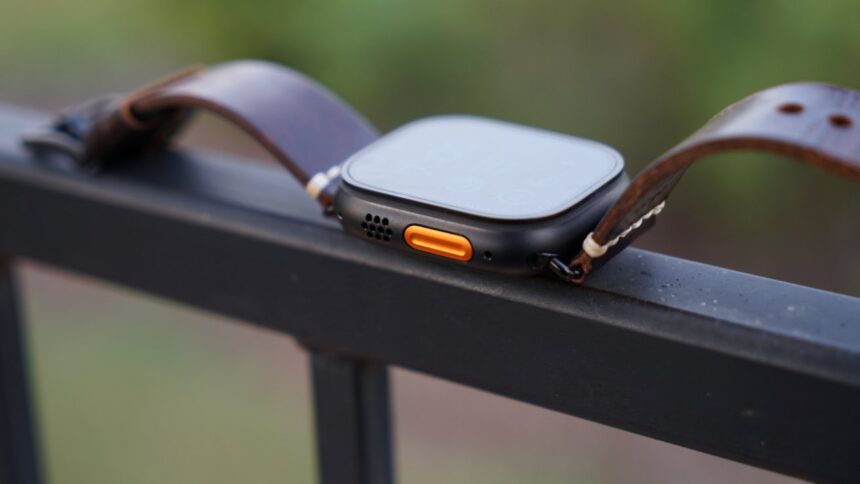
While internal architectural changes inside the Apple Watch Ultra 4 are substantial, its external industrial design remains unchanged from previous generations. The watch retains its signature 49mm natural grade 5 titanium case, raised sapphire front crystal, textured digital crown, and programmable orange Action button. Furthermore, it preserves its 100-meter water resistance rating and EN13319 certification for recreational scuba diving down to 40 meters. For prospective buyers expecting a cosmetic overhaul or a new case geometry, the identical aesthetic may initially appear conservative. However, maintaining a standardized chassis footprint allows manufacturing consistency, ensures universal accessory compatibility, and focuses capital expenditure on silicon engineering and sensor physics.
The retention of the physical Action button highlights an emphasis on tactile reliability in challenging operational environments. Mapped by default to functions such as launching Workouts, setting waypoint markers, or initiating precision stopwatch tracking, the Action button provides immediate physical engagement that touchscreens cannot replicate when wet or operated with heavy gloves. Although software mapping options remain consistent with earlier iterations, the increased responsiveness of the S11 chip eliminates input lag when toggling complex workout profiles. Users seeking enhanced functional customization can map the button to custom shortcuts, reinforcing its role as a flexible hardware control surface for outdoor activities and daily workflows.
In terms of wireless connectivity standards, the Apple Watch Ultra 4 maintains an established suite comprising Wi-Fi 4, Bluetooth 5.3, and multi-band cellular 5G connectivity. While some industry observers anticipated an upgrade to Wi-Fi 6 or newer short-range communication standards, the retention of Wi-Fi 4 reflects a pragmatic design choice optimized for power consumption and low-bandwidth wearable data transfer. Bluetooth 5.3 ensures stable, low-latency connections to peripheral hardware such as power meters, external heart rate straps, and wireless audio equipment, while integrated 5G cellular capabilities support standalone voice calls, messaging, emergency satellite SOS connectivity, and cloud data synchronization without needing a companion smartphone nearby.
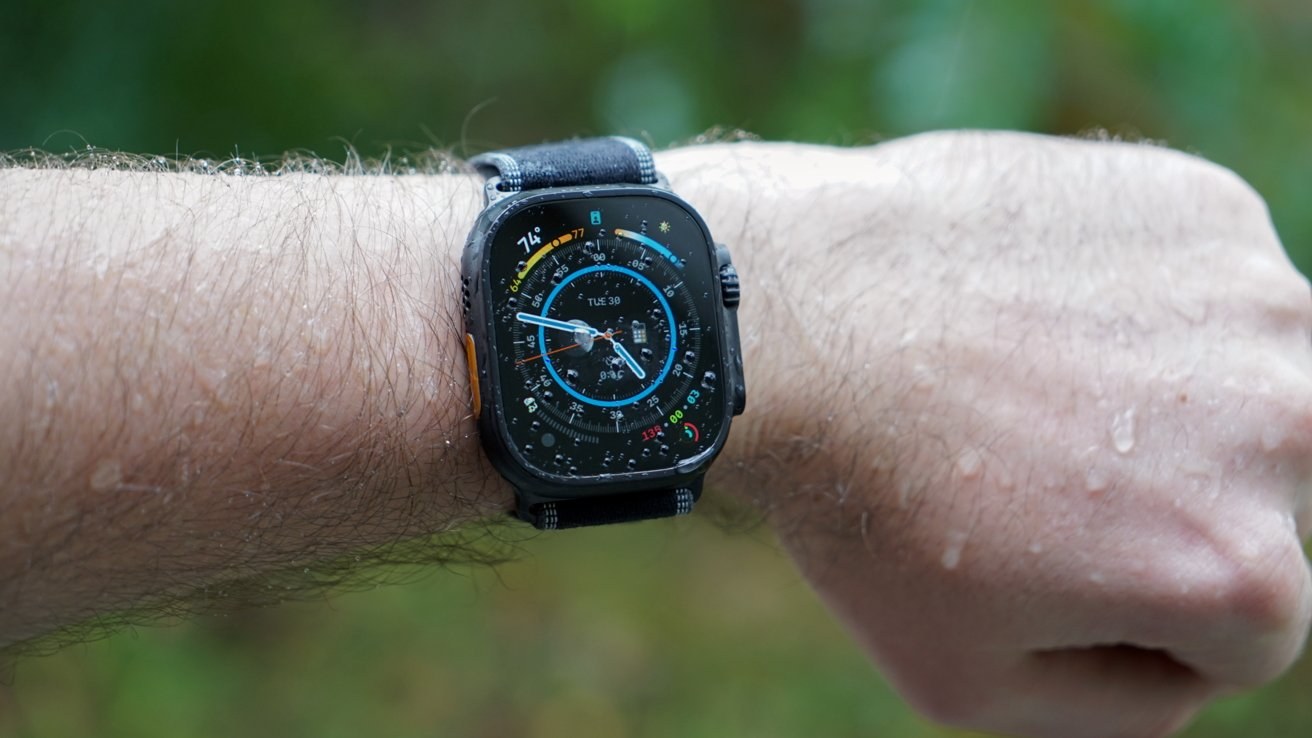
Evaluating the physical enclosure through an engineering lens reveals the practical limits of modern wearable design. Enclosing an array of high-frequency optical sensors, cellular modems, satellite communication arrays, a haptic engine, and a 50-hour lithium-ion battery within a wrist-bound titanium shell presents severe spatial constraints. The minimal 1.4-gram mass gain associated with the Health Sensing System demonstrates how tightly packed modern smartwatch internals have become. Without sacrificing structural durability, ingress protection, or thermal dissipation, engineers maximized internal volumetric efficiency. Consequently, future physical redesigns will likely require breakthroughs in battery chemistry or component miniaturization before dramatic chassis alterations become viable.
For users seeking detailed technical parameters regarding water resistance ratings, sensor tolerances, and cellular frequency support, inspecting official documentation provides clear verification. Prospective buyers can inspect the official Apple Watch documentation provided by the manufacturer to verify exact component specifications and operational limits. Reviewing primary hardware specifications ensures that prospective owners understand the precise capabilities and physical boundaries of the device before making purchasing decisions for specialized diving, mountain climbing, or endurance training applications.
The choice of grade 5 titanium for the chassis enclosure remains a fundamental element of the physical design strategy. Grade 5 titanium offers an exceptional strength-to-weight ratio, superior corrosion resistance against saltwater exposure, and excellent resistance to structural impact compared to standard aluminum or stainless steel alloys. Raised titanium bezels encircle the flat sapphire crystal screen, shielding the glass display edge from direct side impacts against rock surfaces or equipment. This physical protection reduces the risk of screen shattering during rugged outdoor usage, ensuring long-term structural durability in demanding environments.
Acoustic isolation and water ejection mechanics also contribute significantly to the ruggedized profile of the timepiece. The internal speaker cavity utilizes hydrophobic mesh membranes that prevent water ingress while allowing high-volume audio output for emergency sirens and voice calls. Following immersion in deep water, the device uses low-frequency sound bursts to vibrate the speaker diaphragm and actively purge trapped moisture from the cavity. This mechanical water ejection system restores clear audio transmission immediately after swimming or diving, maintaining full communication utility without requiring manual drying.
Software Ecosystem: watchOS 27, iOS 27.2, and Health Intelligence
Hardware components are only as effective as the software architectures that interpret their output, and watchOS 27 working alongside iOS 27.2 transforms raw sensor readings into actionable guidance. Central to the updated user interface is the Siri Modular watch face, designed to present dynamic, contextual information widgets alongside traditional timekeeping elements. Simultaneously, technical faces like Wayfinder remain available for users requiring detailed compass headings, elevation profiles, and customizable complication grids. The combination of high-density watch faces with fluid gesture navigation, including double-tap Smart Stack expansion, allows wearers to access critical data streams without navigating complex application menus.
A pivotal software addition co-launched with this hardware platform is the Readiness app, designed to synthesize heart rate, Heart Rate Variability, sleep latency, and physical activity into a single physiological preparedness metric. However, a key operational constraint of the Readiness app is its requirement for a full seven-day calibration period before displaying analysis. During this initial week, the system establishes a baseline profile unique to the individual’s circadian patterns and autonomic nervous system responses. Prospective users must understand that immediate health insights are not generated out of the box; the algorithms require sustained continuous wear to differentiate normal baseline variance from true physical stress or systemic fatigue.
Despite these software advancements, certain announced artificial intelligence capabilities remain unreleased at the time of publication. Specifically, the highly anticipated Audio Intelligence feature, designed to process ambient acoustic environments, voice queries, and auditory health markers, is currently unavailable even in developer beta builds. While early technical demonstrations highlighted the potential utility of Audio Intelligence for real-time translation and acoustic monitoring, software teams must finalize privacy safeguards and processing optimizations before public deployment. Consequently, buyers evaluating the device today should base purchasing decisions on verified hardware metrics and active watchOS 27 features rather than unreleased software roadmaps.
The commercial landscape for premium smartwatches reflects competitive pricing and evolving retail availability across major distribution channels. While official standard retail MSRP defines baseline product positioning, third-party pricing fluctuates according to market conditions. At press time, promotional offerings on major retail platforms such as Amazon have seen prices drop as low as $779.99 for select configurations. Prospective buyers should monitor authorized retail channels to evaluate potential promotional discounts and trade-in incentives, as total ownership costs fluctuate based on supply chain dynamics and seasonal sales cycles.
The continuous evolution of health-centric wearables signals a fundamental shift in consumer electronics, where hardware value is increasingly measured by biological monitoring fidelity rather than raw screen size or cosmetic novelty. The shift toward higher sensor sampling rates, on-device machine learning execution, and local privacy processing represents a maturation of the wearable form factor. Competitors operating in the wearable AI space must adapt to this elevated hardware standard, as consumers increasingly expect all-day health telemetry, intelligent query parsing, and extended battery life within a single, highly durable device enclosure.
Looking ahead, the trajectory of premium wearable technology points toward deeper integration between continuous biological telemetry and predictive health intervention. As sensor arrays become more sensitive and processing hardware becomes more efficient, the boundary between consumer fitness tracking and clinical diagnostic monitoring will continue to blur. The Apple Watch Ultra 4 demonstrates that iterative physical design can co-exist with significant architectural leaps in silicon performance and biological sensing density. By expanding sensor sampling frequency and extending battery endurance without inflating physical dimensions, Apple reinforces a strategic blueprint where long-term customer value is driven by invisible hardware refinement, robust privacy protections, and continuous biological insight.