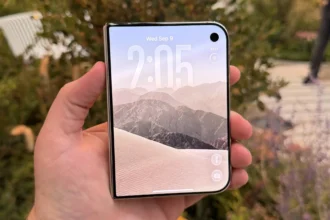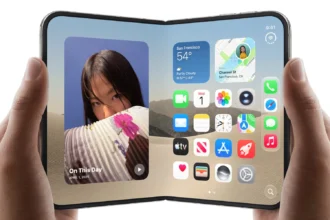

The Xiaomi 18 Pro introduces hardware-integrated directional sub-pixel isolation to create a functional pixel-level privacy screen that shuts off wide-angle luminance on demand. Rather than relying on adhesive optical filters or software contrast masks that degrade baseline image quality, the device physically toggles narrow-angle and wide-angle emitter channels within its OLED display matrix. This architecture restricts visibility beyond a 60-degree off-axis angle while preserving direct-view clarity, standard color calibration, and up to 4,000 nits peak brightness for the primary operator. By embedding privacy control directly into the panel material and sub-pixel routing layer, mobile security transitions from a passive third-party compromise into an active hardware capability.
How a Pixel-Level Privacy Screen Alters Mobile Security
Standard mobile display panels utilize a broad light distribution model, emitting optical power uniformly across wide viewing angles to ensure comfortable media consumption from virtually any position. While ideal for group viewing, this wide-angle emission inherently exposes sensitive credentials, personal messaging, and corporate documentation to visual eavesdropping in dense public environments. Traditional software countermeasures attempt to obscure on-screen content through digital blurring or contrast reduction, but these techniques do not prevent off-axis light propagation. Individuals standing nearby can still discern high-contrast text and layout structures on screen. Physical privacy glass overlays attempt to solve the issue using microscopic louver grids, yet they permanently diminish display brightness, cause moiré patterns, and distort color balance.
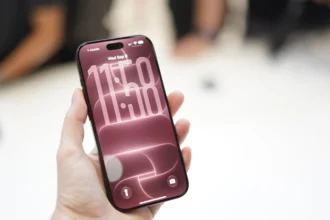
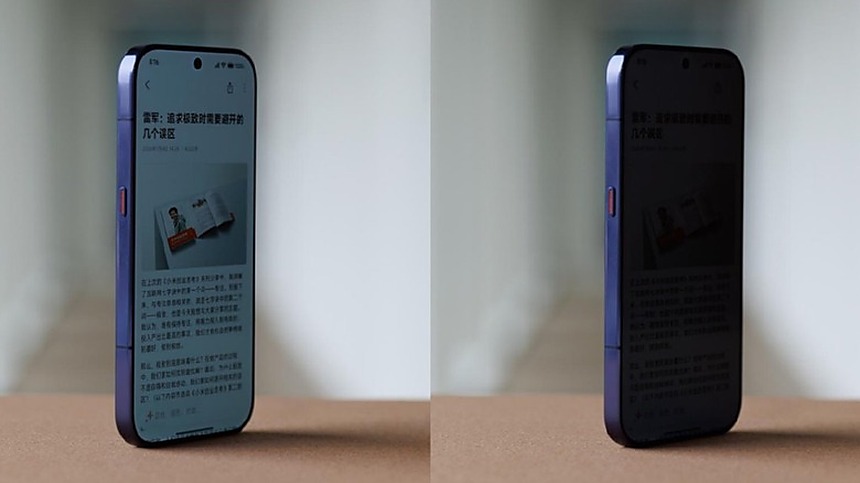
SuperPixel 2.0 resolves this trade-off by engineering a dual-emitter sub-pixel layout directly into the panel matrix. Each pixel site contains standard wide-angle sub-pixels alongside dedicated narrow-angle privacy sub-pixels equipped with micro-directional optics. In standard operating mode, both emitter channels operate concurrently, projecting light across a wide spatial field that matches traditional high-end smartphone displays. When privacy mode is toggled, the display controller dynamically cuts power to the wide-angle sub-pixel circuit, driving only the directional channels. The light output becomes strictly focused along the normal axis of the glass, rendering the screen dark or illegible to anyone observing from angles greater than 60 degrees. This hardware approach builds upon recent market movements toward directional emission, following trends toward inward hinge protection and narrow-angle privacy detailed in trifold smartphone design analysis while refining optical consistency across all viewing modes.
Luminescent Efficiency and the Luminance Tradeoff
Integrating two distinct emitter sets within a single display surface creates a severe physical constraint because total active emitting area per pixel channel is reduced compared to conventional OLED panels. Allocating screen real estate to directional micro-optics and isolated routing lines reduces the sub-pixel aperture ratio. Without advanced panel chemistry, driving only the narrow-angle sub-pixels would produce severe luminance drops, visible grain, and uneven color reproduction across the panel surface. To overcome this aperture efficiency penalty, Xiaomi built the 18 Pro display around a newly developed M11 luminescent material stack. This organic substrate generates higher photon yield per milliampere of drive current, enabling local peak brightness levels up to 4,000 nits while supporting the broad BT.2020 color space.
By boosting the base optical efficiency of the luminescent stack, the panel delivers crisp contrast and high peak brightness in narrow-angle mode without requiring excessive power draw that could cause thermal buildup. Direct-view users maintain access to vibrant HDR imagery and sharp text legibility, overcoming the greyish haze that historically characterized directional screen technologies. The implementation extends beyond underlying hardware to include deep integration with device control systems and contextual awareness algorithms. Users can activate narrow-angle mode manually through Quick Settings toggles, remapped physical side keys, or voice commands handled by the assistant. According to technical launch details shared on Xiaomi channels, the privacy framework connects directly to the front-facing camera pipeline and hardware neural processing units. When spatial computer-vision models detect a secondary gaze positioned behind the primary operator, the operating system can automatically trigger the privacy mechanism without manual user intervention.
Secondary Displays and Processing Performance Breakdown
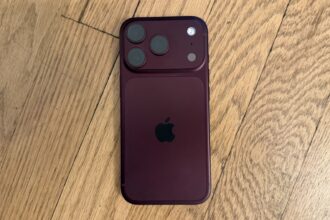
Beyond front-facing display architecture, the Xiaomi 18 Pro incorporates a functional 2.86-inch secondary OLED display running at 120Hz, embedded flush within the rear camera island. While the primary 6.4-inch display handles main system interaction, the rear panel addresses form-factor limitations that have traditionally forced users toward complex foldable designs. Folding smartphones use mechanical hinges and flexible polymer substrates to expand screen real estate, but they introduce structural vulnerability, crease lines, and compromised dust resistance. A rigid dual-screen slab design offers secondary interaction without introducing mechanical pivot points or compromising structural integrity.
The rear display serves multiple functional roles, acting as a zero-latency viewfinder for main-camera selfie capture, presenting glanceable notification cards, and allowing low-power system management when resting face-down. By shifting brief interactions to the smaller secondary display, overall panel power consumption can be minimized. Processing operations for the dual-display controller rely on Qualcomm’s Snapdragon 8 Elite Gen 6 chipset, backed by configurations offering up to 16GB of RAM and 1TB of storage. Hardware-accelerated NPU pipelines enable continuous background spatial awareness while keeping thermal production within tight constraints. This system design reflects broader industry efforts to harden operating environments, similar to initiatives expanding GrapheneOS on foldable devices to protect sensitive user telemetry at the system level.
Imaging Capabilities and Battery System Dynamics
The optical system built into the rear camera module features a Leica-engineered triple-camera array led by a 200-megapixel main sensor using the Light Fusion 960L optical layout. This primary sensor is paired with a 200-megapixel telephoto camera capable of 3.2x optical zoom and a 50-megapixel ultrawide module. Up front, a 50-megapixel selfie camera handles standard video calls, though the rear OLED display allows users to easily frame self-portraits using the main 200-megapixel sensor instead. This dual-display synergy elevates mobile photography by giving users access to full optical stabilization, larger physical sensor area, and superior low-light performance for selfie capture.
Sustaining a dual-display hardware architecture alongside dynamic sub-pixel switching demands a robust energy storage system. In its domestic Chinese release, Xiaomi equips the device with a 7,000mAh battery paired with 100W wired and 50W wireless fast-charging technology. The substantial energy density helps buffer the power demands of real-time camera-based privacy monitoring and high-luminance panel driving. However, global rollout plans face localized regulatory scrutiny and regional safety certifications before international release windows open. Final hardware specifications for export markets remain subject to regional release announcements and network operator validations.
Hardware-level pixel privacy represents a mature evolution in mobile display design, transitioning security management from software overlays to precise optical wave control. As advanced OLED materials lower efficiency barriers for micro-directional emitters, pixel-level viewing angle controls are set to shift from niche flagship features to essential enterprise requirements.