
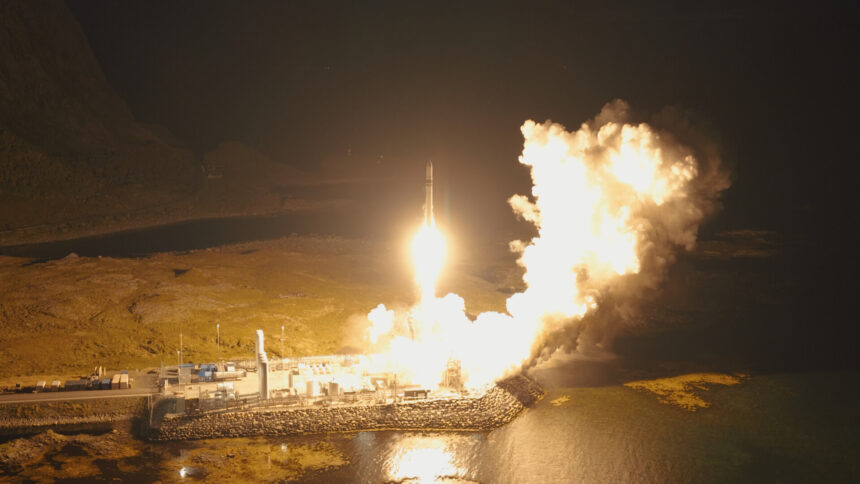
The successful execution of a European commercial rocket launch by Munich-based startup Isar Aerospace marks a pivotal transition point for sovereign spaceflight. By delivering its Spectrum rocket to orbit, the enterprise demonstrated that private capital can establish independent orbital capabilities without relying exclusively on state-managed programs. For decades, Western European orbital access remained anchored to heavy institutional oversight and government-funded consortia. The Spectrum flight proves that commercial ventures in Europe can achieve orbital insertion independently, offering a new operational template for satellite operators, defense agencies, and commercial enterprises seeking flexible access to low Earth orbit.
This orbital achievement carries deep historical resonance within European aerospace development. Spectrum now stands as the largest rocket constructed predominantly in Germany since the World War II era V-2 weapon system. In the decades following that conflict, high-altitude German rocketry was largely constrained to suborbital research vehicles and specialized industrial subcontracts, such as manufacturing upper stages for French-led launcher initiatives. By taking full development ownership from combustion chamber design to orbital injection, Isar Aerospace has fundamentally shifted Germany from a component supplier to a primary system integrator capable of sovereign orbital operations.
How a European Commercial Rocket Launch Disrupts Geo-Return Models
To evaluate the structural significance of this launch, one must analyze the traditional European space procurement model known as geographical return, or geo-return. Under this framework, participating nations contribute funding to the European Space Agency with a guarantee that equivalent financial value in subcontracts returns to their domestic suppliers. While this policy ensured political cohesion and distributed technical expertise across member states, it frequently created complex supply chains and inflated overhead. Legacy launchers like Ariane were built upon these institutional guarantees, prioritizing equitable spending distribution over strict operational agility or unit-cost minimization.
Private enterprises like Isar Aerospace bypass the structural inertia of geo-return by consolidating engineering, supply chain management, and assembly under a streamlined commercial model. Rather than distributing subsystem production across dozens of state-subsidized aerospace contractors to satisfy political quotas, private launch providers design systems based on cost efficiency and market demand. This shift mirrors the private hardware methodologies transforming global flight infrastructure, raising questions about whether commercial launch capacity collapse could occur if legacy providers fail to adapt. Competitive European venture capital demonstrates that private teams can build complex aerospace hardware faster and with greater fiscal discipline than traditional state-guided programs.
This changing dynamic arrives at a critical juncture for institutional satellite operators. European governments currently pay a substantial financial premium when deploying scientific, earth observation, and defense satellites on sovereign European rockets compared to commercial rideshare offerings available globally. Contracting with international providers offers lower immediate launch expenditures, yet it introduces political exposure and undermines regional launch independence. The emergence of a competitive domestic commercial market allows public institutions to transition toward competitive commercial procurement models without sacrificing strategic access to space.
Strategic Autonomy and Geopolitical Satellites
The drive toward commercial launcher diversity is directly linked to broader geopolitical uncertainties and shifting regulatory frameworks. As seen in shifting transatlantic digital policies and EU Digital Services Act compliance mandates, European institutions increasingly favor operational sovereignty across tech infrastructure. Fluctuating trade policies and unpredictable political cycles in the United States have forced European policymakers to re-examine their critical infrastructure dependencies. Reliance on foreign launch providers for defense satellites, communications constellations, and environmental monitoring assets presents a structural vulnerability that institutional actors are eager to mitigate.
Despite this strategic momentum, European aerospace ventures face persistent structural headwinds compared to North American counterparts, particularly regarding venture capital availability. The private space ecosystem in the United States benefits from deep liquid capital markets, massive defense innovation budgets, and a risk-tolerant investment culture willing to fund multi-year hardware development. In contrast, European deep-tech startups navigate a conservative investment landscape with smaller fund sizes and fewer institutional investors willing to back high-risk hardware innovations. This capital differential forces European firms to achieve operational milestones on tighter budgets, demanding extraordinary capital efficiency and focused engineering execution.
The market demand for medium-class commercial rockets like Spectrum is propelled by the rapid growth of small and medium satellite constellations. While super-heavy rockets excel at deploying massive cargo payloads or dozens of rideshare satellites to standardized orbits, they cannot always provide custom orbital inclinations or precise deployment schedules for individual constellation operators. Dedicated small and medium launch vehicles fill this crucial operational gap by delivering payloads directly to tailored orbits without requiring customer payloads to wait for secondary slots on heavy-lift missions. This operational flexibility is essential for commercial operators managing telecommunications networks and climate observation arrays.
Supply Chain Constraints and Scalability Limits
Sustaining an active orbital launch schedule presents intricate manufacturing and logistical challenges that extend far beyond initial launch validation. Rocket production requires highly specialized metallurgy, advanced additive manufacturing techniques, precise turbopump machining, and complex flight software integration. Expanding production rates from single flight validation articles to serial factory manufacturing demands resilient supply chains capable of delivering specialized alloys and high-purity propellants without bottlenecking assembly lines. Furthermore, navigating complex cross-border regulatory approvals, range safety protocols, and environmental impact assessments across European jurisdictions adds operational complexity that private space startups must master.
The success of Isar Aerospace’s Spectrum vehicle represents more than a single milestone for German engineering; it signals the structural modernization of Europe’s entire space economy. As private competition challenges traditional government procurement paradigms, the regional market is transitioning from heavy, state-funded monopolies toward a multi-provider landscape built on commercial speed, private investment, and strategic autonomy. The ultimate trajectory of this transformation will depend on whether European financial markets and regulatory bodies can match the speed and ambition of the private aerospace ventures now claiming their place in orbit.