
The rapid growth of low Earth orbit constellations has transformed space access, but managing hardware after deployment remains difficult. While satellite deployment scales continuously, capabilities to inspect, repair, relocate, or de-orbit assets remain in developmental stages. In this environment, commercial satellite servicing serves as a key benchmark for long-term orbital sustainability. Developing operational craft for rendezvous and proximity operations requires solving complex technical challenges alongside unpredictable financial models. Pioneer companies are advancing through incremental flight tests, moving from private demonstrations to institutional partnerships. Assessing this operational transition provides essential context for broad launch dynamics explored in analysis of commercial launch capacity constraints facing satellite operators globally.
The financial structure supporting orbital rendezvous technologies has evolved substantially over recent years. Early projects relied primarily on venture equity to demonstrate core physical mechanisms in orbit. Satellite servicing developer Astroscale demonstrated this initial phase with its ELSA-D mission, which was fully internally funded. During that flight, the craft carried a target payload, released it into space, and executed autonomous capture routines. That test confirmed that relative navigation algorithms and magnetic docking interfaces could operate under controlled flight conditions. However, relying entirely on private equity creates significant financial burn without generating immediate commercial revenue. To mitigate financial risk, servicing companies shifted toward co-funded programs with major national space agencies.
This hybrid investment framework created a stable bridge between private enterprise and state institutions. Subsequent efforts like ADRAS-J were structured as joint funding partnerships alongside the Japan Aerospace Exploration Agency. Meanwhile, European programs like ELSA-M combined financial backing from the European Space Agency and the UK Space Agency. These public partnerships shared capital burdens while aligning commercial operational targets with government space safety directives. State backing enabled engineering teams to refine sensor suites, guidance software, and proximity control without requiring immediate unit profit. As these government-backed programs mature, mission profiles are gradually shifting toward revenue-positive commercial contracts. Future missions, including ADRAS-J2, aim to establish financial self-sustainability by securing commercial contract terms, bridging the structural gap between experimental tech demos and scalable enterprise services.
Evaluating the Roadmap for Commercial Satellite Servicing
The technical transition from controlled target docking to uncooperative debris remediation represents a formidable engineering shift. In the ELSA-D mission, the target object broadcast its positioning telemetry and presented a known mechanical docking plate. Real debris presents far more complex dynamic variables. Abandoned rocket stages and defunct satellites do not transmit positioning telemetry, lack standardized fixtures, and often exhibit multi-axis rotation. Servicing craft targeting rocket stages, such as ADRAS-J2, must navigate around large, oblong structures that remain non-spinning but carry significant physical mass. Executing close proximity maneuvers around these heavy objects requires guidance and control systems capable of mapping structural volumes in real time.
Navigating Complex Rendezvous and Proximity Operations
Inspecting decommissioned operational satellites introduces even greater complexity than non-spinning rocket bodies. Specialized missions like ISSA-J1, developed with JAXA, are designed to rendezvous with and inspect two decommissioned Japanese satellites in orbit. Unlike uniform rocket stages, operational satellites feature flexible solar arrays, extended communication antennas, and protruding sensors. Furthermore, these multi-component structures often experience rotational drift caused by residual propellant venting or solar radiation pressure. Approaching an object with extended appendages requires flight software to maintain dynamic keep-out zones while continuously updating trajectory paths. Flight control algorithms must dynamically track structural components while matching relative motion to avoid catastrophic collisions in orbit.
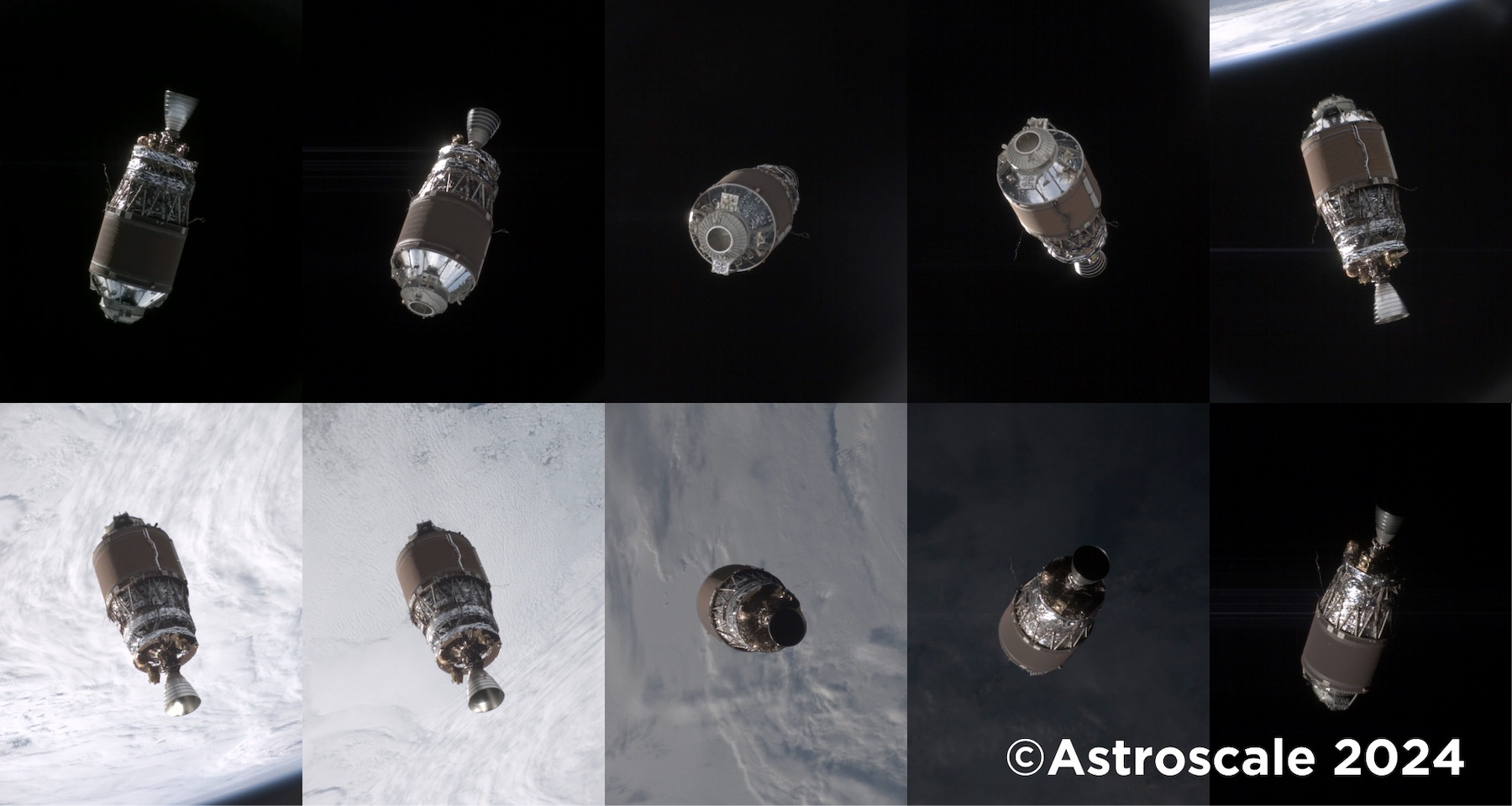
Despite varying mission objectives, satellite servicing providers are building modular hardware and software frameworks across their manufacturing lines. Managing eight to nine satellite missions simultaneously under active construction globally allows engineering teams to standardize core hardware components. High-resolution optical cameras, LIDAR units, relative navigation software, and autonomous control routines form a shared operational baseline across different mission profiles. Every proximity flight گزارش اولیه telemetry directly back into autonomous flight models. This accumulation of flight data bridges computer simulations with real space mechanics, accelerating the maturity of autonomous rendezvous software. This technical progress mirrors broader industrial trends analyzed in discussions on how European commercial rocket launches challenge established space procurement models.
Economics and Governance of Orbital Debris Remediation
While technical capabilities expand through hardware iterations, achieving a standardized commercial servicing model requires resolving launch logistics and client business cases. Today, no space logistics provider has established a fully operational, commercially repeatable multi-order servicing system capable of executing standardized service calls on demand. Current operations remain custom engineering projects requiring dedicated integration timelines. Transitioning from bespoke missions to repeatable enterprise contracts depends on lowering manufacturing costs and accelerating flight preparation. Furthermore, launch selection remains a critical cost variable, as servicing craft must reach specific orbital planes without consuming excessive onboard propellant.
Looking toward the early 2030s, space operators anticipate the emergence of a commercially sustainable servicing market. Industry projections suggest that standardized docking plates, refuelable propulsion systems, and automated capture mechanisms could eventually become routine elements of satellite design. However, reaching this operational maturity requires overcoming key uncertainties. The precise timeline for establishing repeatable servicing contracts depends on demonstrating safe operations around tumbling targets, securing affordable launch opportunities, and establishing international legal rules for on-orbit contact.
The evolution of rendezvous and proximity operations represents a major structural shift for the broader space economy. By advancing from equity-funded tech demos to public agency partnerships and commercial contract models, servicing pioneers are laying the groundwork for operational orbital infrastructure. As flight datasets expand and autonomous guidance software matures, on-orbit servicing will gradually transition from specialized engineering projects into a core utility for global space operations.