
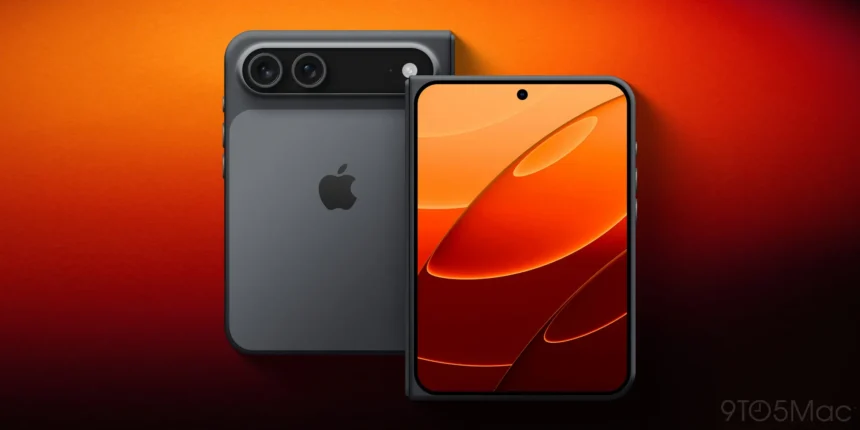
Industry speculation regarding a potential dual-screen handset from Apple has intensified around the rumored foldable iPhone form factor. Rumors surrounding this prospective device suggest a hardware blueprint featuring a 5.5-inch outer cover screen and a 7.6-inch inner folding display. While unconfirmed by official manufacturer channels, analyzing these dimensions against established mobile devices provides an essential framework for evaluating pocketability, ergonomic balance, and screen utility. Understanding how a 7.6-inch internal canvas translates into real-world handling requires looking beyond raw diagonal screen measurements to examine structural aspect ratios, bezel efficiency, and folded chassis thickness.
To evaluate the practical implications of a 7.6-inch folding display, a comparison with legacy compact tablets proves instructive. The fifth-generation iPad mini famously featured a 7.6-inch display utilizing a 4:3 aspect ratio. However, that traditional tablet required wide top and bottom bezels to accommodate physical controls and structural borders, resulting in a significantly larger overall footprint. Modern folding display architecture eliminates those expansive bezels by employing ultra-thin glass substrates and flexible organic light-emitting diode panels. When unfolded, a 7.6-inch panel provides near-tablet visual real estate while maintaining a frame barely larger than the active display area itself.
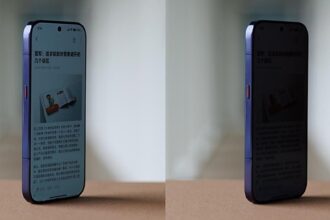
The external cover display represents a crucial operational boundary for any book-style folding architecture. A rumored 5.5-inch outer screen positions the closed device in direct conversation with compact handheld smartphones. For instance, legacy compact devices such as the iPhone 13 mini offered a 5.4-inch display within a footprint measuring roughly 131 millimeters in height. Comparative photos shared by Shishir reveal how compact handsets align with these emerging display proportions. A folded chassis can thus mirror the pocketability of smaller devices while instantly opening into a small tablet workspace.
Market competitors have already established production baselines using similar screen dimensions. Samsung launched the Galaxy Z Fold 8 in July featuring a 5.5-inch outer display and a 7.6-inch inner display. That hardware demonstrates how vendors attempt to balance one-handed closed usability with expanded multi-window productivity. Comparative analysis reveals the distinct mechanical constraints inherent to folding hardware. As detailed in our analysis on foldable iPhone stylus tradeoffs, hardware engineers prioritize display longevity over additional input layers.
Evaluating Structural Dynamics in the Foldable iPhone Form Factor
Achieving a seamless transition between a compact folded state and an expanded inner screen introduces severe mechanical engineering trade-offs. The primary technical hurdle involves the hinge mechanism, which must sustain tens of thousands of folding cycles without inducing stress fractures in the flexible display panel or creating an unsightly visible crease. Hinge mechanisms must also incorporate internal gear assemblies that manage mechanical friction, allow variable angle positioning, and seal internal components against dust and particulate ingress. Achieving water resistance in a dual-chassis device linked by a mechanical hinge remains one of the most complex engineering feats in modern consumer electronics.
Chassis thickness represents another critical physical parameter for pocket comfort and daily usability. When folded, a dual-screen device doubles its depth, compounding the thickness of two individual display housing units, internal structural frames, heat distribution plates, and exterior protective glass layers. If each half measures 5 to 6 millimeters when open, the combined folded profile approaches 10 to 12 millimeters. This thickness significantly alters pocket comfort and one-handed operation compared to conventional single-slate smartphones, which typically range between 7 and 8 millimeters. Consequently, reducing panel thickness without compromising structural rigidity or battery capacity is a central focus for thermal and mechanical engineers.
Battery distribution across a folding chassis presents unique electrical and spatial challenges. Unlike traditional monoblock smartphones that house a single high-capacity lithium-ion cell, folding architectures generally require a split-battery system with independent battery cells positioned in each half of the device. These power cells must be electrically linked through flexible printed circuit cables spanning the hinge mechanism. Balancing power management, charge rates, and heat generation across two separated thermal zones requires sophisticated power delivery controllers, particularly when demanding computational tasks are executed on the larger internal display.
Software Adaptation and Interface Scaling Realities

Hardware dimensions tell only half the story, as screen aspect ratio fundamentally dictates how software displays content. A 7.6-inch internal display with a near-square aspect ratio excels at side-by-side multitasking, document editing, and expansive web browsing. However, it creates distinct challenges for traditional 16:9 or 19.5:9 video content, which must letterbox significantly, leaving large black bars above and below the video playback area. Operating systems must dynamically adapt application layouts as users transition between outer cover displays and internal canvas displays.
Software continuity requires seamless application state retention when opening or closing the device. If an application is active on the 5.5-inch cover display, the system interface must instantly re-render that application across the expanded 7.6-inch canvas without forcing a process restart or losing user input. For developers, this necessitates building responsive user interfaces that fluidly adjust column counts, navigation bars, and panel hierarchies. Furthermore, software must intelligently handle multi-window layouts, allowing users to drag and drop elements between adjacent applications in a manner akin to a desktop operating system. As discussed in our exploration of privacy on foldable devices, expanding mobile form factors requires tight software security and system optimization.
Component Procurement and Supply Chain Dynamics
The commercial viability of a mass-production folding flagship hinges on complex display panel supply chains. Premium flexible OLED displays featuring Ultra-Thin Glass protection are produced by a limited number of specialized display vendors. Yield rates for crease-resistant folding panels remain considerably lower than those for rigid glass screens, driving up unit manufacturing costs. Negotiating panel specifications, color accuracy standards, and refresh rate synchronization across supply partners requires long lead times and massive capital investment. The interplay between hardware design ambitions and supply chain capacity dictates whether a new form factor can be manufactured at global scale.
Market dynamics are further complicated by consumer expectations regarding device durability and longevity. Single-slate smartphones have reached a point where ceramic-infused glass and ingress protection allow devices to withstand accidental drops and submersion with minimal risk. Folding smartphones, by contrast, rely on softer polymer protective coatings over flexible glass panels, making them inherently more susceptible to surface scratching and localized pressure damage. Overcoming consumer skepticism regarding long-term display durability remains a fundamental requirement for expanding foldable market penetration beyond early adopters.
Pricing strategy and market positioning represent another critical structural dimension. Dual-screen folding hardware demands premium bill-of-materials costs due to dual display assemblies, intricate hinge assemblies, and split power architectures. Consequently, these devices sit at the highest tier of consumer pricing, competing directly with high-end laptops and professional tablet platforms. Device makers must present a clear productivity and lifestyle proposition to justify this premium, demonstrating that the space savings of a folding device deliver tangible value over carrying a traditional phone and tablet separately.
The convergence of a 5.5-inch cover display and a 7.6-inch interior panel represents a distinct design philosophy that prioritizes pocket efficiency over minimal chassis depth. Should premium device architectures converge on these dimensions, the operational boundary between high-end smartphones and compact tablets will permanently blur, forcing app developers and hardware designers to reimagine how portable computing platforms should function in everyday life.