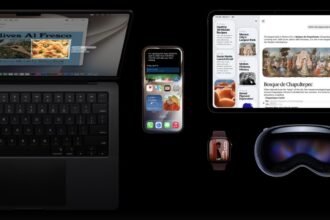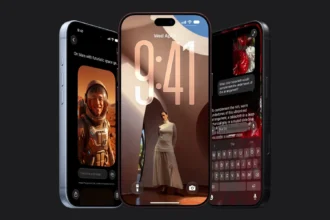

The public release of the iOS 27 update marks a calculated shift in how mobile operating systems deliver artificial intelligence and visual customization to consumers worldwide. Rather than presenting a fully finalized ecosystem overhaul, the software deployment establishes a foundational bridge between legacy digital assistant paradigms and next-generation generative capabilities. Available alongside synchronized platform releases for iPadOS 27, watchOS 27, and visionOS 27, the software suite represents a unified strategy to modernize software across diverse hardware footprints. While the headline addition revolves around an enhanced machine intelligence assistant, the broader engineering changes indicate a deeper recalibration of system aesthetics, developer frameworks, and user agency.
Consumers gaining access to the platform will immediately encounter an operating environment attempting to balance local device processing constraints against high-level computational ambitions. The software distribution model reflects a staged global rollout strategy where core features launch incrementally rather than simultaneously across all regions and native tongues. By launching the primary artificial intelligence architecture as a selective beta for English language configurations, the engineering team acknowledges the immense complexity involved in deploying contextual language parsing globally. Further details regarding global platform availability are now rolling out across official distribution channels for compatible consumer hardware.
Analyzing Siri AI in the iOS 27 Update
The centerpiece of this operating system transition is Siri AI, an expansive artificial intelligence framework engineered to replace legacy voice assistant mechanisms. Operating initially as a public beta release restricted to English language settings, the revised assistant attempts to synthesize natural language understanding with deep system-level integration. Unlike previous iterations that relied heavily on remote cloud routing for intent recognition, this revised engine emphasizes local device execution to accelerate response times and preserve personal data integrity. By leveraging specialized hardware acceleration found in recent silicon architectures, the system processes multi-step queries without requiring continuous round-trip communication to central server farms.
Executing machine learning workloads locally on handheld devices introduces significant operational constraints regarding thermal dissipation, memory bandwidth, and overall battery efficiency. Modern silicon chips incorporate dedicated neural engines specifically optimized for parallel matrix multiplication, allowing contextual language models to evaluate user intent within narrow millisecond budgets. However, processing complex contextual tasks directly on hardware requires operating systems to throttle background tasks aggressively during heavy inference requests. Exploring earlier breakthroughs in iOS 27 interface mechanics reveals how hardware resource management shapes real-time user experiences across diverse screen configurations.
Restricting the initial rollout to English-speaking regions underscores the structural friction inherent in training localized machine learning models. Official roadmaps confirm that expanded language support for French, Japanese, Korean, Portuguese, and Spanish is scheduled for deployment in October. This staggered release timeline highlights the underlying challenge of adapting context-aware language models to diverse syntactic structures and regional accents. For non-English users, the temporary absence of localized intelligence demonstrates how modern platform updates increasingly fragment global user experiences based on linguistic geography.
In practice, the beta designation signals that assistant functionality remains an evolving system subject to continuous architectural refinement. Early adopters will encounter an interface capable of managing cross-app workflows and semantic content parsing, yet bounded by real-world limitations in unpredictable edge cases. Releasing the software in an accessible beta state reflects a broader industry pattern where conversational software is iteratively tuned using real-world operational telemetry. Rather than withholding capabilities for a perfect final build, engineering teams prioritize gathering continuous usage data to refine algorithmic accuracy over time.
Visual Customization and Liquid Glass Opacity Controls
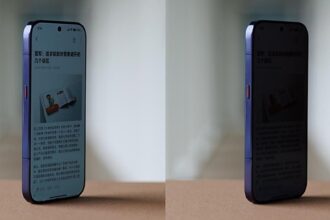
Beyond conversational machine intelligence, the visual environment undergoes a substantial transformation through the introduction of dedicated Liquid Glass opacity controls. This user-interface parameter grants individuals granular control over the transparency and structural frosting applied across system layers, navigation panels, and background elements. Historically, mobile operating systems enforced rigid design guidelines with fixed visual translucency designed to maintain brand uniformity across millions of active displays. The introduction of dynamic opacity sliders represents a pragmatic compromise between design coherence and personalized user utility.
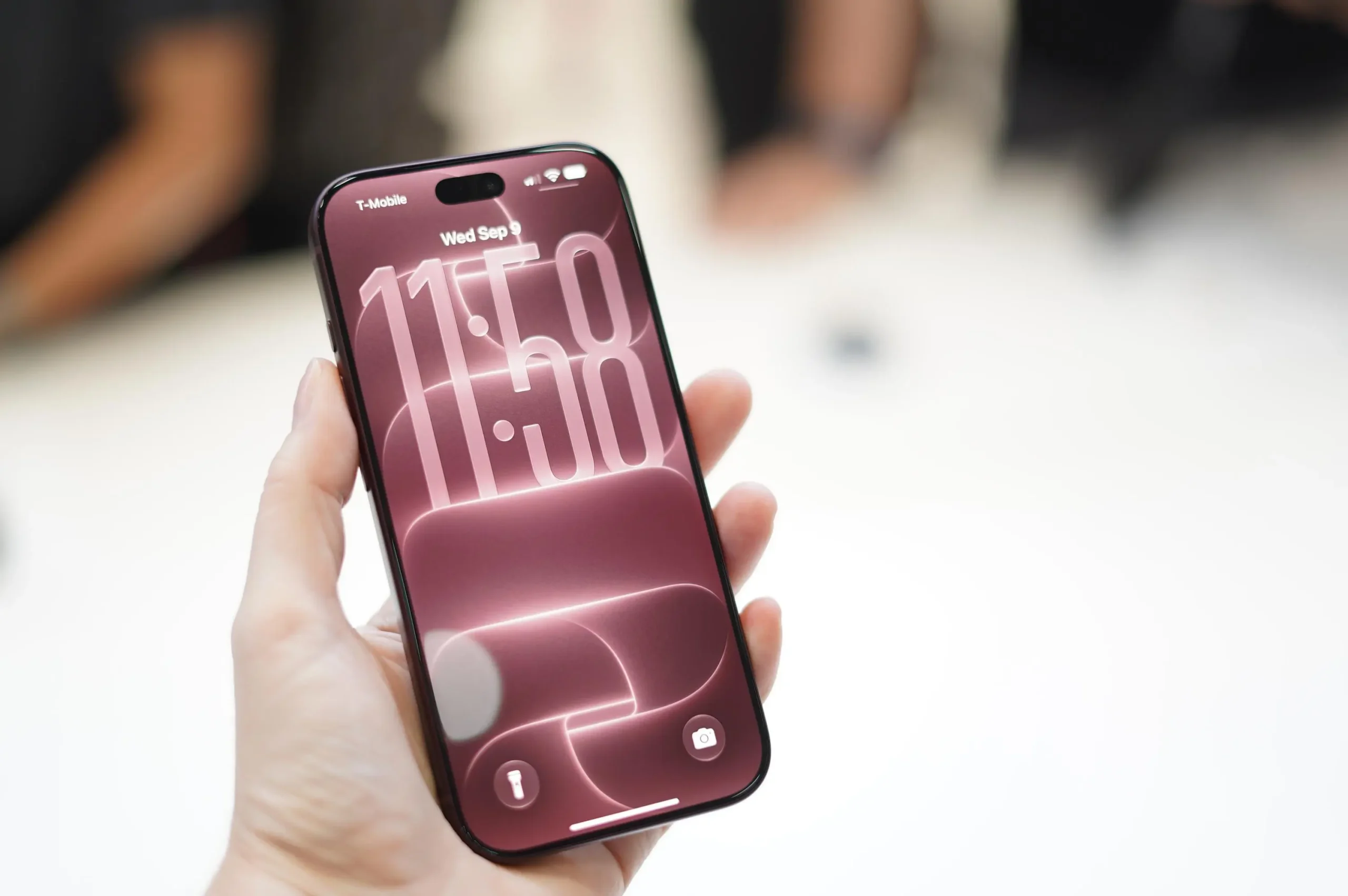
Adjusting visual translucency serves a functional purpose that extends far beyond simple aesthetic preference. On high-contrast displays, varying the level of UI frosting directly impacts legibility, power consumption, and spatial visual hierarchy. Users operating handheld hardware in challenging ambient lighting conditions can increase panel opacity to sharpen text separation and lower visual fatigue. Conversely, individuals seeking an immersive media experience can reduce visual weight in favor of underlying dynamic content layers. This degree of operational control reflects a broader recognition that static design paradigms cannot accommodate every real-world usage scenario.
Complementing the opacity slider is a comprehensive visual update across native application icons and system typography. Built-in applications feature refreshed icon graphics that incorporate subtle depth cues, updated gradients, and revised geometry. These visual refinements are not merely cosmetic embellishments, as they establish a cohesive visual language designed to align with spatial computing platforms. By harmonizing icon geometry across smartwatches, tablets, and spatial headsets, the software architecture reinforces a consistent user identity across distinct screen formats. Examining ongoing developments in watchOS 27 app compatibility highlights how underlying software changes maintain performance standards across companion hardware.
Ecosystem Integration and Developer Implications
The simultaneous deployment of watchOS 27, iPadOS 27, and visionOS 27 alongside the primary smartphone platform highlights an overarching strategy of multi-platform synchronicity. In previous software release cycles, secondary platform releases frequently lagged behind mobile updates, creating operational inconsistencies for multi-device users. By harmonizing release schedules across four distinct hardware categories, the software development division ensures that core framework components deploy concurrently across the entire product ecosystem. This synchronized cadence minimizes operational friction and maintains consistent feature availability across personal computing devices.
Synchronized platform releases carry profound implications for software developers building applications across multiple screen formats. When core machine learning frameworks and visual rendering engines update simultaneously across hardware tiers, software engineers can implement cross-platform feature sets without writing fragmented codebases for staggered operating system versions. This architectural parity accelerates application maintenance cycles and reduces engineering overhead, ultimately delivering a more cohesive software catalog to consumers. However, multi-platform synchronization also increases systemic vulnerability risks, as any latent architectural defect introduced in shared system libraries can affect an individual’s entire device collection simultaneously.
Hardware compatibility remains a crucial operational factor during major system transitions, particularly as on-device machine learning requirements increase. Older processor architectures may lack the specialized neural hardware required to execute complex artificial intelligence workflows efficiently. Consequently, older device generations might run the baseline system software while lacking access to advanced contextual assistant capabilities. This hardware-tier gating creates an implicit hardware upgrade cycle, encouraging users seeking full artificial intelligence capabilities to transition toward modern hardware equipped with dedicated acceleration modules.
This operating system deployment represents a pivotal shift where conversational intelligence and adaptive user interface controls converge to reshape personal computing expectations. By offering advanced assistant features as a controlled English beta while delivering granular visual customization through dynamic opacity controls, the platform balances technological ambition with system stability. As expanded language support arrives in October and developers adopt shared frameworks, the value of this software cycle will depend on how reliably on-device intelligence scales across diverse hardware without compromising speed or privacy.