
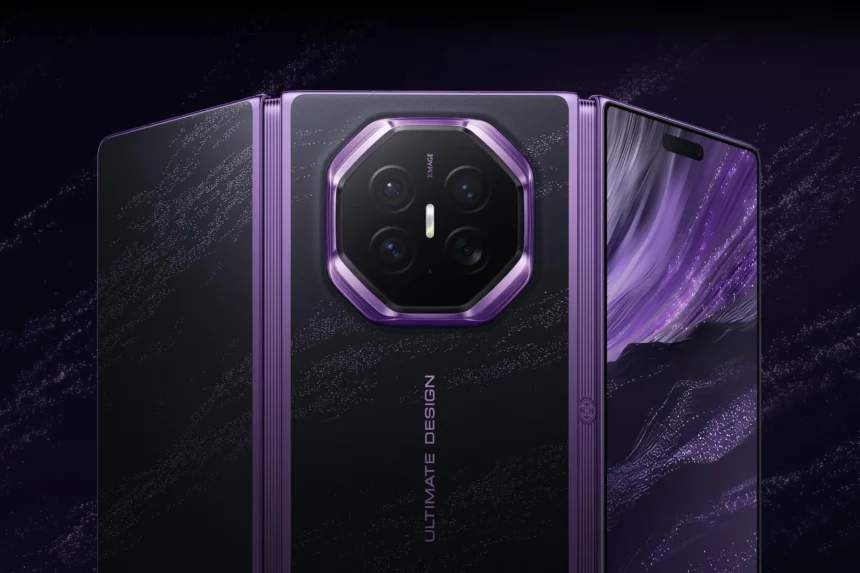
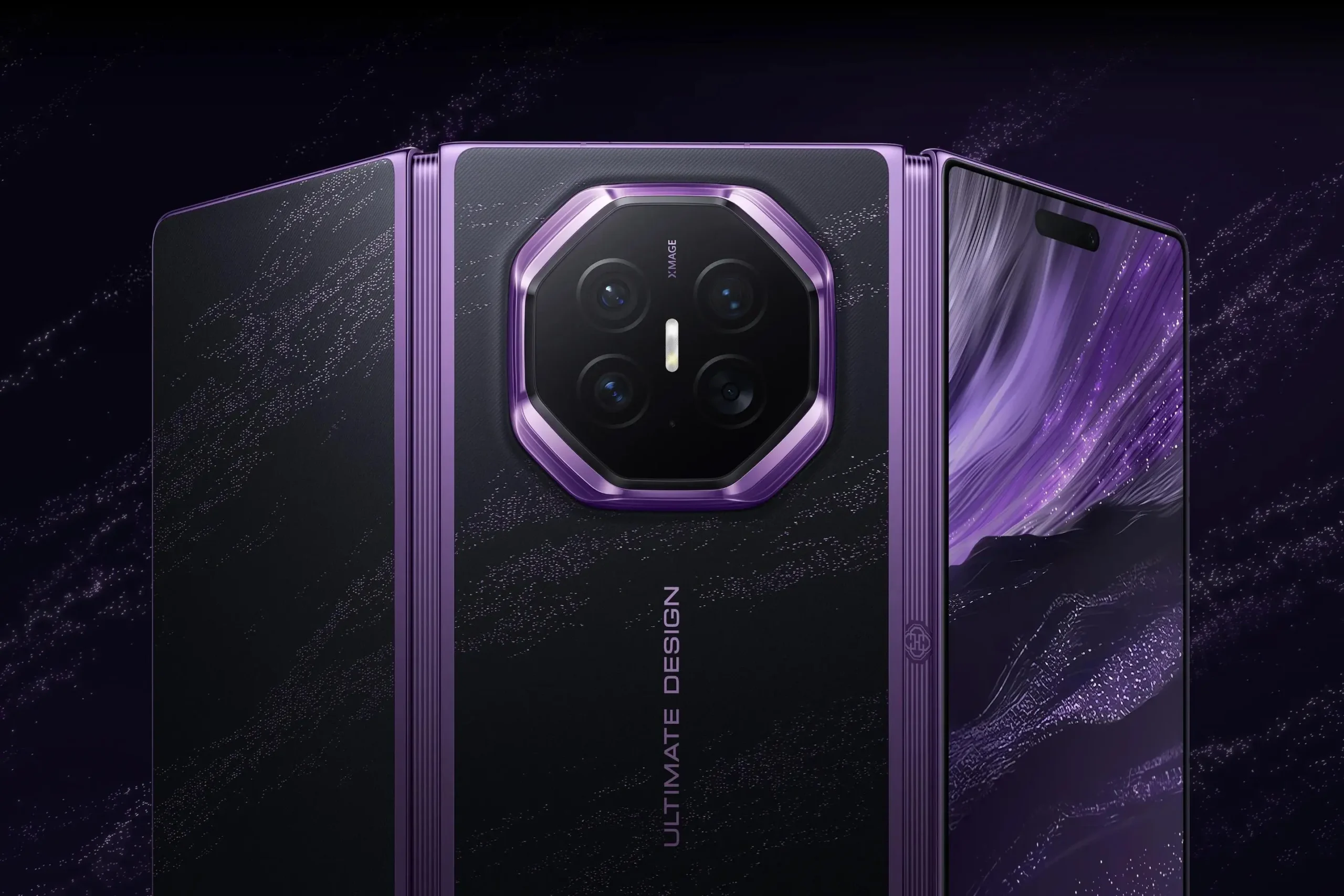
The consumer mobile industry is reaching a pivotal structural transition as multi-hinge devices evolve from experimental proof-of-concept hardware into refined mass-production hardware. Huawei recently introduced its third trifold device, the Mate XT 2, in China, marking a distinct departure from its previous hardware iterations. Rather than adhering to the exposed accordion layout seen in earlier generations, the device adopts an inward-folding orientation while introducing hardware-level directional viewing controls. This shift highlights how engineering priorities are moving away from visual novelty toward structural durability and operational security in modern trifold smartphone design.
When multi-hinge devices first emerged, manufacturers faced an immense mechanical challenge regarding double-folding flexible panels without creating impossible hinge radii or excessive chassis thickness. The initial approach on the original Mate XT, launched in late 2024 before its international rollout, relied on an accordion-style folding sequence. That design allowed one segment of the flexible panel to function as an exterior cover screen when folded. While this configuration eliminated the weight penalty of a dedicated outer screen, it left one-third of the delicate ultra-thin glass exposed to environmental damage.
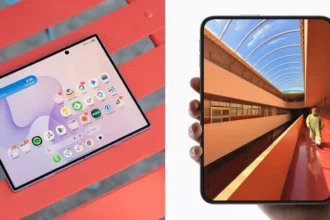
Transitioning to an inward-folding architecture alters the mechanical calculus of flexible hardware by enclosing all flexible screen segments inside the chassis during transport. This structural shielding mirrors the mechanical approach seen in devices like the Samsung Galaxy Z TriFold, demonstrating an industry convergence around protective shell dynamics. However, protecting the primary display internally introduces an unavoidable trade-off in component density and total mass. Engineers must incorporate a separate secondary display on the exterior shell to maintain quick single-handed utility, adding driver circuitry and glass to the chassis.
To understand these engineering trade-offs, it is helpful to examine how foldable display technology balances structural ergonomics against surface protection under repeated stress. The primary challenge in an inward-folding design lies in managing differing bend radii across two distinct hinge axes during daily folding operations. The innermost fold requires a significantly tighter curvature, placing high compressive stress on panel layers, while the secondary hinge accommodates adjacent panel thickness. Solving these mechanical dynamics requires multi-axis gear assemblies and liquid metal alloys that minimize structural deflection over hundreds of thousands of cycles.
Why is trifold smartphone design moving to inward hinges?
The migration toward inward-folding mechanisms represents more than a simple aesthetic preference or temporary design trend across Asian supply chains. For early adopters and corporate users, outward-folding flexible displays presented a persistent physical liability during daily routine usage. Even minimal surface friction against pockets, desk edges, or keys inside carrying bags caused microscopic abrasions on delicate polyimide and ultra-thin glass layers. Over extended ownership cycles, these micro-scratches compromised structural integrity, creating focal points where subsequent bending stress could trigger catastrophic screen fracture.
By pivoting to an internal folding sequence, device designers transfer the primary protective responsibility from vulnerable glass substrates to hardened aluminum and titanium outer shells. When fully closed, the Mate XT 2 completely encloses its interior display panels, creating a rigid protective sandwich that shields the fragile OLED layers from impact and abrasive dust particles. This structural reconfiguration dramatically extends the operational lifespan of expensive flexible displays, reassuring enterprise buyers who view multi-hinge smartphones as long-term productivity investments rather than delicate disposable gadgets.
However, structural encapsulation demands significant compromises in component packing and overall physical volume. An inward-folding trifold phone must integrate a dedicated secondary exterior panel to remain usable when closed. This secondary display requires its own digitizer, backlight circuitry, and toughened protective cover glass, adding crucial fractions of a millimeter to overall chassis thickness. Furthermore, routing power and display data lines through two separate mechanical hinges to supply three discrete screen segments creates unprecedented internal wiring density challenges that force engineers to rethink traditional motherboard layouts.
How display privacy technology alters foldable hardware priorities
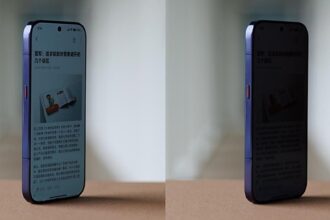
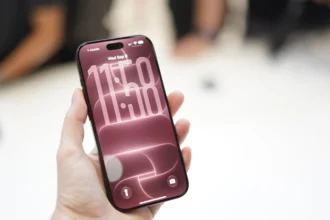
Beyond physical mechanical revisions, the integration of hardware-based display privacy technology represents a significant functional shift for ultra-large form factor devices. Expansive flexible displays offer tablet-class real estate, but they also expose sensitive information to nearby observers in crowded public spaces. The inclusion of directional viewing modes in the Mate XT 2, similar to optical controls on the Samsung Galaxy S26 Ultra, addresses this vulnerability directly at the display substrate level.
Optical privacy technology operates by manipulating light propagation through specialized micro-louver arrays or liquid crystal layers embedded within the display stack. When activated, the panel restricts lateral light emission so that observers at adjacent angles see only a darkened screen while the user maintains clarity. Integrating this electronic privacy layer into a flexible OLED stack introduces substantial manufacturing complexity, requiring substrates that withstand repeated flexing without delaminating or distorting light path angles.
The simultaneous adoption of internal folding mechanics and integrated privacy panels illustrates how enterprise security requirements are shaping flagship mobile hardware. Mobile professionals require large canvas areas for multi-window multitasking, yet they cannot compromise on visual confidentiality in public spaces. According to technical documentation on Huawei official launch details, embedding directional optical controls into high-density OLED panels maintains manageable power consumption while offering instant privacy toggle control.
This trajectory mirrors developments in mobile security where protection features move from software overlays directly into physical hardware stacks. As discussed in our evaluation of foldable device privacy features, software-only solutions like screen dimming fail to prevent off-axis visual monitoring. Hardware-level optical directional filtering ensures that light rays are physically prevented from traveling sideways, establishing a new baseline expectation for premium business devices.
Thermal and economic bottlenecks in complex foldable architectures
While inward-folding designs solve screen protection and privacy concerns, they impose strict constraints on internal thermal dissipation and component layout. In outward accordion configurations, ambient air assists in dissipating heat from exposed panel surfaces during light operational workloads. In contrast, an internally folded device traps thermal energy within stacked chassis layers when closed under heavy system loads. Processors running real-time artificial intelligence processing or multi-stream video decoding must throttle quickly unless advanced vapor chambers are integrated across all chassis segments.
Thermal management in a three-panel chassis requires distributed heat dissipation networks that span across rotating hinge boundaries. Flexible graphite thermal sheets and micro-fluidic vapor chambers must cross mechanical pivot points without tearing or losing thermal conductivity over thousands of folding cycles. If heat accumulates unevenly across the three chassis sections, local thermal expansion can introduce mechanical binding within the hinge gears, accelerating component wear and compromising smooth opening motion.
Furthermore, the economic barrier to entry for complex trifold manufacturing remains exceptionally high due to low panel yields. Yield rates for dual-hinge flexible panels are significantly lower than traditional single-hinge displays, driving up production overhead. When manufacturers add integrated directional privacy layers and dual display drivers, bill of materials costs escalate rapidly. These financial realities concentrate multi-hinge hardware in the ultra-premium pricing tier, serving as innovation testbeds for future mass-market foldables.
Long-term industry trajectories for multi-hinge mobile hardware
The evolution of multi-hinge mobile hardware demonstrates that form factor innovation is entering a pragmatic stabilization phase. The early era of foldable development prioritized dramatic unfolding sequences and maximum visual impact, often accepting severe durability vulnerabilities to achieve striking industrial profiles. As the market matures, commercial realities are forcing manufacturers to prioritize functional longevity, screen protection, and privacy controls over purely experimental mechanics.
As production yields improve and component costs decrease, the engineering techniques honed on ultra-premium trifold devices will likely influence broader smartphone portfolios. Custom liquid-metal hinges, ultra-compact dual-axis gear assemblies, and embedded optical privacy layers will eventually cascade down to mainstream single-fold devices and standard candy-bar flagship smartphones. This cross-pollination of hardware technologies ensures that high-end foldable engineering yields lasting architectural benefits for the entire consumer electronics ecosystem.
The transition toward protected internal folding mechanics and directional display controls signals that high-end foldable hardware is reaching operational maturity. As manufacturers resolve structural vulnerabilities and mitigate visual privacy risks, software optimization and long-term mechanical reliability will define the next competitive frontier.