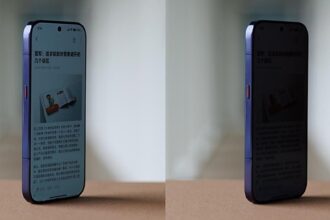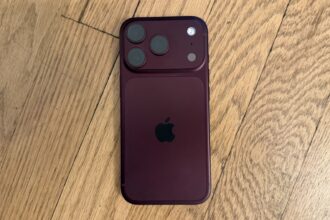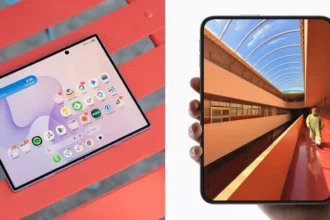


The introduction of novel multi-screen hardware inevitably forces major technology manufacturers to re-evaluate their long-standing product boundaries. As new device categories mature, hardware engineers and software architects must articulate how these complex systems coexist alongside established platforms rather than quietly eroding them. When addressing the potential for an iPhone Duo iPad overlap, Apple Senior Vice President of Software Engineering Craig Federighi offered a structural perspective on how user behaviors evolve across distinct form factors. Speaking in a detailed interview with MKBHD, Federighi outlined an editorial framework where tailored software optimization and organic user adoption define how dual-screen mobility interacts with traditional tablet workflows. Rather than treating hardware cannibalization as an operational flaw, the company positions functional convergence as a natural progression of personal computing habits.
When consumers evaluate multi-screen or foldable mobile hardware, the immediate question centers on whether a single versatile pocket device can replace dedicated secondary screens. Historical precedents across the consumer electronics sector demonstrate that hardware categories often share superficial capabilities while fulfilling entirely different ergonomic and computational roles. When tablets first achieved commercial scale over a decade ago, industry analysts predicted the rapid and permanent decline of lightweight portable laptops. Instead, both product families expanded along distinct operational trajectories, defined by input modalities, physical display posture, and contextual computing needs. Federighi invoked this exact historical pattern to explain how dual-screen mobile hardware will interact with portable slates, asserting that users quickly establish predictable routines based on physical context and task complexity.
Understanding the practical realities of the iPhone Duo iPad overlap requires analyzing how physical display dimensions shape daily digital consumption patterns. A dual-screen smartphone offers immediate pocketability for mobile scenarios while providing an expanded display canvas when unfolded or opened for extended tasks. In everyday situations, a user might begin interacting with an application on a compact outer interface before transitioning to an expanded dual-display layout to read long-form reports, manage dense communication streams, or inspect visual documents. Recent architectural breakdowns of the iOS 27 foldable interface functionality illustrate how dynamic multi-window navigation adapts seamlessly to changing physical postures. When expanding a primary pocket device provides adequate visual real estate for focused work, the immediate necessity of carrying a secondary slate diminishes.
The specific operational intersection where this behavioral shift becomes most acute is the compact tablet segment. Federighi explicitly highlighted the iPad mini as the specific product whose functional domain might be filled by an expandable dual-screen mobile phone for certain user groups. For years, small-format tablets served as dedicated reading slates, portable note-taking devices, and field telemetry tools for users who found standard smartphone displays too restrictive for extended interaction. However, when a primary smartphone can expand on demand to deliver a comparable reading canvas, the practical justification for owning a separate eight-inch tablet narrows significantly. The convenience of carrying an expandable display in a single pocket alters the utility equation, encouraging consumers to consolidate their portable computing workflows into a primary device.
This structural dynamic does not signify the immediate obsolescence of compact slates, but it fundamentally redefines their underlying value proposition. Users who rely on small tablets for specialized enterprise tasks, dedicated stylus input, professional field telemetry, or retail kiosk applications will continue to require dedicated tablet hardware. Conversely, casual consumers who primarily utilize compact slates for leisure reading, video streaming, and casual web browsing may find that an expandable smartphone fulfills those exact requirements without requiring separate device management or redundant wireless service plans. A detailed iPhone Duo display analysis confirms that high-density dual-panel systems can comfortably absorb casual tablet consumption tasks without compromising visual clarity. General consumption features consistently migrate toward the most portable display capable of delivering them effectively.
Evaluating the iPhone Duo iPad Overlap in Daily Portability
A persistent structural challenge facing dual-screen and foldable devices across the broader mobile industry lies in software layout optimization. Competitor platforms have frequently relied on intermediate software compromises, such as stretching standard smartphone layouts or aggressively scaling tablet user interfaces to fit non-traditional display aspect ratios. This technical shortcut often produces awkward spatial distribution, inconsistent touch targets, and unoptimized visual density across expanded screens. Federighi emphasized that Apple developed a tailored operating environment specifically for this form factor from the beginning, building dedicated interaction models rather than applying brute-force scaling algorithms to existing iOS interface elements.
Designing operating system software specifically for a dual-display environment requires re-evaluating core navigation paradigms, multitasking behaviors, and window management frameworks. Standard mobile software platforms rely heavily on linear navigation stacks and full-screen application states optimized for single displays. In contrast, dual-screen software architectures must gracefully handle state transitions between closed, angled, and fully open physical postures. When operating system software adapts natively to geometric changes, user interactions feel intentional rather than compromised. Tailored layout frameworks allow text columns, media feeds, and multi-window productivity tools to reconfigure dynamically, ensuring that expanded display real estate delivers genuine information gain rather than empty visual space.

This deliberate focus on tailored software integration serves as a crucial differentiator in a rapidly maturing hardware ecosystem. As physical display components, hinge mechanisms, and dual-panel display controllers become standardized across global supply chains, software refinement emerges as the decisive factor in long-term platform retention. Operating systems that treat multi-screen environments as first-class architectural targets enable third-party developers to construct applications that respond naturally to physical transformations. By embedding multi-panel layout logic directly into core system frameworks, the platform minimizes the friction traditionally associated with novel hardware layouts, encouraging broader developer adoption across diverse software categories.
System Dynamics and Strategic Ecosystem Pressure
From an ecosystem management perspective, allowing internal product overlap reflects a mature platform strategy rather than operational oversight. Industry leaders understand that attempting to insulate legacy product categories from internal hardware evolution creates strategic vulnerabilities that market competitors will eventually exploit. By introducing high-end mobile hardware that absorbs functions previously reserved for small tablets, a platform provider secures user engagement within its broader operating environment. The underlying revenue dynamics shift from selling multiple discrete hardware units to capturing higher average selling prices on hyper-versatile flagships, while maintaining active service subscriptions across a unified software account.
Furthermore, the evolution of pocketable expandable displays influences broader tablet portfolio dynamics by forcing larger tablet configurations to differentiate through professional workstation capabilities. As compact slates face direct functional competition from expandable pocket devices, larger tablet lines must lean heavily into desktop-class processing power, advanced display technologies, modular desktop peripherals, and complex creative software workflows. The functional space between mobile smartphones and desktop workstations continues to compress, requiring each tier of the hardware stack to offer unambiguous ergonomic and computational advantages to justify its presence in a modern user workflow.
As real-world adoption data matures over subsequent device release cycles, software engineers and hardware architects will continuously refine how multi-screen interfaces interact with peripheral hardware and cloud services. The boundaries defining mobile operating systems will increasingly emphasize contextual awareness, automatically adjusting interface complexity based on physical posture, active input peripherals, and environmental conditions. Rather than forcing users to choose between rigid device categories, the long-term industry trajectory points toward fluid computational surfaces that scale dynamically to match immediate task requirements.
Ultimately, the emergence of expandable pocketable hardware marks a pivotal transition in mobile computing architecture. By addressing functional overlap directly through tailored software engineering rather than artificial feature segmentation, hardware makers allow natural usage patterns to redefine product boundaries. As multi-screen mobile platforms continue to mature, success will be measured not by how effectively legacy product lines are insulated from change, but by how seamlessly software environments adapt to the changing physical dimensions of daily personal computing.