
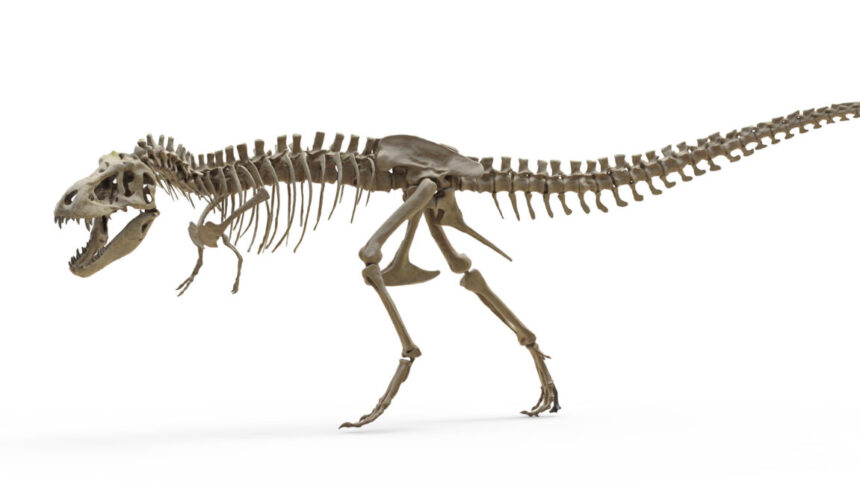
Determining the physiological engine that powered the late Cretaceous apex predator Tyrannosaurus rex has remained one of paleontology’s most enduring challenges. For decades, scientists debated whether giant theropods functioned as sluggish ectotherms dependent on solar radiation, warm-blooded endotherms generating internal heat, or inertial homeotherms insulated purely by massive body volume. Recent empirical investigations combining dental isotope geochemistry with advanced atmospheric climate simulations offer a far more nuanced picture. By analyzing carbonate clumped isotopes preserved within fossilized teeth, researchers demonstrate that T. rex body temperature was consistently maintained within a narrow range between 34.7 and 37.3 degrees Celsius. This steady thermal plateau, significantly higher than ambient environmental baselines of the epoch, suggests a physiological architecture far closer to modern birds and mammals than previously verified by physical fossil remains alone.
The methodological core of this discovery relies on clumped isotope paleothermometry, an analytical technique that measures the thermodynamic preference of heavy isotopes, specifically carbon-13 and oxygen-18, to form bonds with one another inside carbonate minerals. In bio-apatite, the mineral component of tooth enamel, the frequency of these atomic bonds reflects the precise temperature at which the enamel crystallized inside the living organism. Unlike conventional oxygen isotope analysis, which requires knowing the exact isotopic composition of the water ingested by the animal, clumped isotope measurements function as an independent paleothermometer. When applied to T. rex fossil teeth, the resulting chemical signatures provide a direct record of core metabolic operating parameters, bypassing the guesswork historically associated with inferring soft-tissue function from skeletal anatomy.
Decoding T. rex body temperature through tooth chemistry
To contextualize the thermal measurements, researchers established local baseline temperatures using co-occurring fossil organisms from the Hell Creek Formation. Contemporary crocodilians analyzed in parallel yielded an average body temperature of 30.9 degrees Celsius, matching the modern crocodilian behavior of shuttling between aquatic habitats and sunlit riverbanks to maintain internal temperatures between 30 and 35 degrees. To determine the ambient environmental baseline, scientists evaluated clumped isotopes in fossilized freshwater mussels from identical geological strata. Because freshwater mussels record summer water temperatures without internal thermal modification, their signatures provided an ambient baseline averaging approximately 26 degrees Celsius. The stark thermal contrast between aquatic invertebrates, ectothermic reptiles, and T. rex confirms that the apex predator operated at temperatures dramatically elevated above its local surroundings.
Establishing that an extinct animal was warmer than its immediate environment does not automatically prove internal heat production. Paleoclimatologists addressed this environmental uncertainty by executing a mesoscale global climate simulation tailored specifically to the late Cretaceous period. Running on a high-resolution grid of approximately 60 kilometers, the atmospheric modeling incorporated paleogeographic continental arrangements, atmospheric carbon dioxide levels, and ocean surface temperatures. Even under the warmest simulated climate scenarios, the hottest summer months within the Hell Creek region peaked at approximately 33 degrees Celsius, while mean annual temperatures hovered near 21 degrees. Consequently, T. rex maintained an internal operational temperature roughly 14 degrees Celsius above the annual average of its habitat, ruling out simple passive thermal equilibrium with ambient air.
Evaluating the mechanics of endothermy and gigantothermy
A persistent objection to theropod endothermy has been the concept of gigantothermy, or inertial homeothermy, wherein an animal of massive proportions retains metabolic heat simply due to a low surface-area-to-volume ratio. Under pure gigantothermy, a large animal can achieve high body temperatures without elevated metabolic activity because heat dissipates very slowly through its thick outer tissues. However, isotopic data gathered from juvenile T. rex specimens complicates this passive model. Analysis of younger, lower-mass individuals revealed body temperatures higher than predicted by metabolic scaling equations designed for cold-blooded reptiles of equivalent weight. Although thermodynamic scaling equations for extinct taxa remain subject to academic debate, the elevated temperatures recorded in smaller juveniles imply that internal heat generation was active throughout growth rather than an emergent property of adult physical mass.
To translate these geochemical findings into an ecological understanding of geographic distribution, research teams constructed virtual species models using physiological data from 465 living endothermic mammals and birds. Modern endotherms operate across extreme thermal landscapes, maintaining internal stability while tolerating ambient temperatures ranging from -13 to 43.6 degrees Celsius. By mapping the measured T. rex body temperature range of 34.7 to 37.3 degrees Celsius alongside seasonal precipitation projections onto late Cretaceous continental maps, the virtual species framework predicted habitat suitability across North America. The analysis factored in shifting coastlines caused by the Western Interior Seaway, a shallow ocean that bisected the continent during the late Cretaceous, isolating eastern and western landmasses.
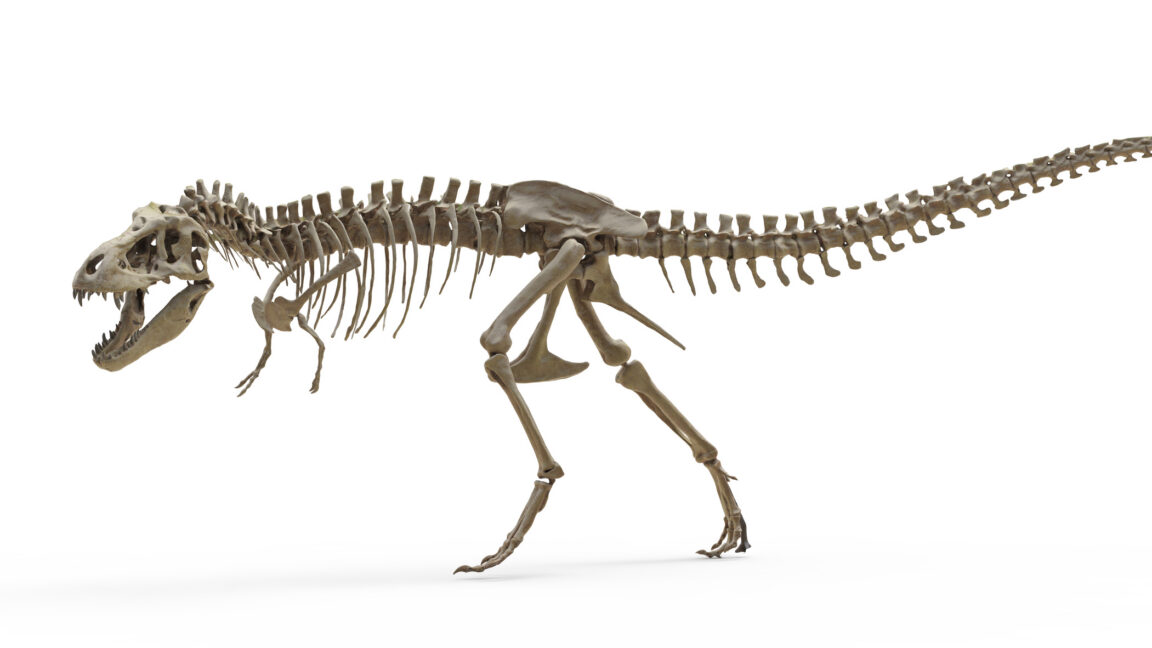
Geographic expansion across Cretaceous North America
The modeling revealed that homeothermic endothermy gave T. rex an extraordinary macroecological advantage. Rather than being confined to warm equatorial zones or lowland coastal swamps, the dinosaur possessed the thermal resilience necessary to occupy virtually any terrestrial environment across North America. From temperate northern latitudes to seasonal inland forests, the ability to regulate internal body temperature independently of fluctuating daily weather allowed T. rex to maintain peak locomotive and predatory performance year-round. This geographic flexibility aligns with the expansive dispersal patterns observed in the fossil record, demonstrating how metabolic energetics directly dictated apex predator distribution across prehistoric landscapes.
Maintaining a high, stable core body temperature imposes significant metabolic costs. True endotherms require exponentially higher caloric intake compared to ectotherms of similar mass to fuel their internal furnace. An adult T. rex operating at nearly 37 degrees Celsius would have required vast energetic resources, demanding substantial prey consumption that reshaped predator-prey biomass ratios across late Cretaceous ecosystems. This energetic requirement implies low population densities spread over vast territorial ranges, a structural dynamic reflected in the relative scarcity of apex theropod fossils compared to herbivorous prey species like ceratopsians and hadrosaurs.
The integration of isotopic paleothermometry, high-resolution climate modeling, and macroecological simulation highlights a transformative shift in paleobiology. Rather than relying solely on anatomical inference or qualitative osteological markers such as bone histology, modern paleontology increasingly employs multi-physics computational pipelines to reconstruct prehistoric physiology. Similar technological approaches are currently reshaping our understanding of environmental changes in historical climate shocks and advanced atmospheric modeling frameworks. Researchers interested in broader analytical methodologies can explore foundational studies on computational environmental modeling through official scientific literature accessible at the DOI foundation repository.
Beyond prey consumption dynamics, internal thermal stabilization requires sophisticated physiological mechanisms for dissipating excess heat, particularly in animals exceeding five metric tons. Large endotherms face a continuous risk of hyperthermia during strenuous activity or extreme summer highs. Skeletal features in large theropods, including extensive cranial vascular networks and complex respiratory air sacs, likely operated as specialized thermal exchange mechanisms, dumping excess heat into the atmosphere to preserve brain and ocular function. This structural balance between heat production through high resting metabolic rates and heat dissipation via vascular structures illustrates that internal thermoregulation was not an accidental byproduct of size, but an integrated evolutionary system encompassing metabolic biochemistry, organ systems, and skeletal architecture across the entire theropod lineage.
While the precise balance between metabolic endothermy and inertial heat retention in juvenile versus adult specimens will continue to generate scientific discussion, the empirical consensus is shifting toward homeothermic regulation as a key driver of theropod success. As advanced analytical modeling techniques propagate across paleobiology, researchers are gaining tools to evaluate how ancient metabolic strategies adapted to rapid environmental shifts. Understanding how apex predators maintained energetic stability across changing climate regimes provides critical perspective on physiological resilience, underscoring the intimate connection between organismal energetics and continental-scale ecosystem architecture.